Dual RV Backup Camera Wireless for Trailer, Easy Setup Solar Rear View Camera with 7-inch Recording Monitor, 4 Channels Strong Magnetic HD 1080P for Camper Truck Fifth Wheel Review (2026)
Updated September 14, 2026 · Research-based review
Our verdict
This dual camera kit suits trailer and fifth wheel owners who want a magnetic, no-wire backup camera at the hitch and the rear of the rig. Solar assisted battery power and a 328 foot wireless range cover most towing setups, though the magnetic mounts need a steel surface and can shift on rough gravel or washboard roads.
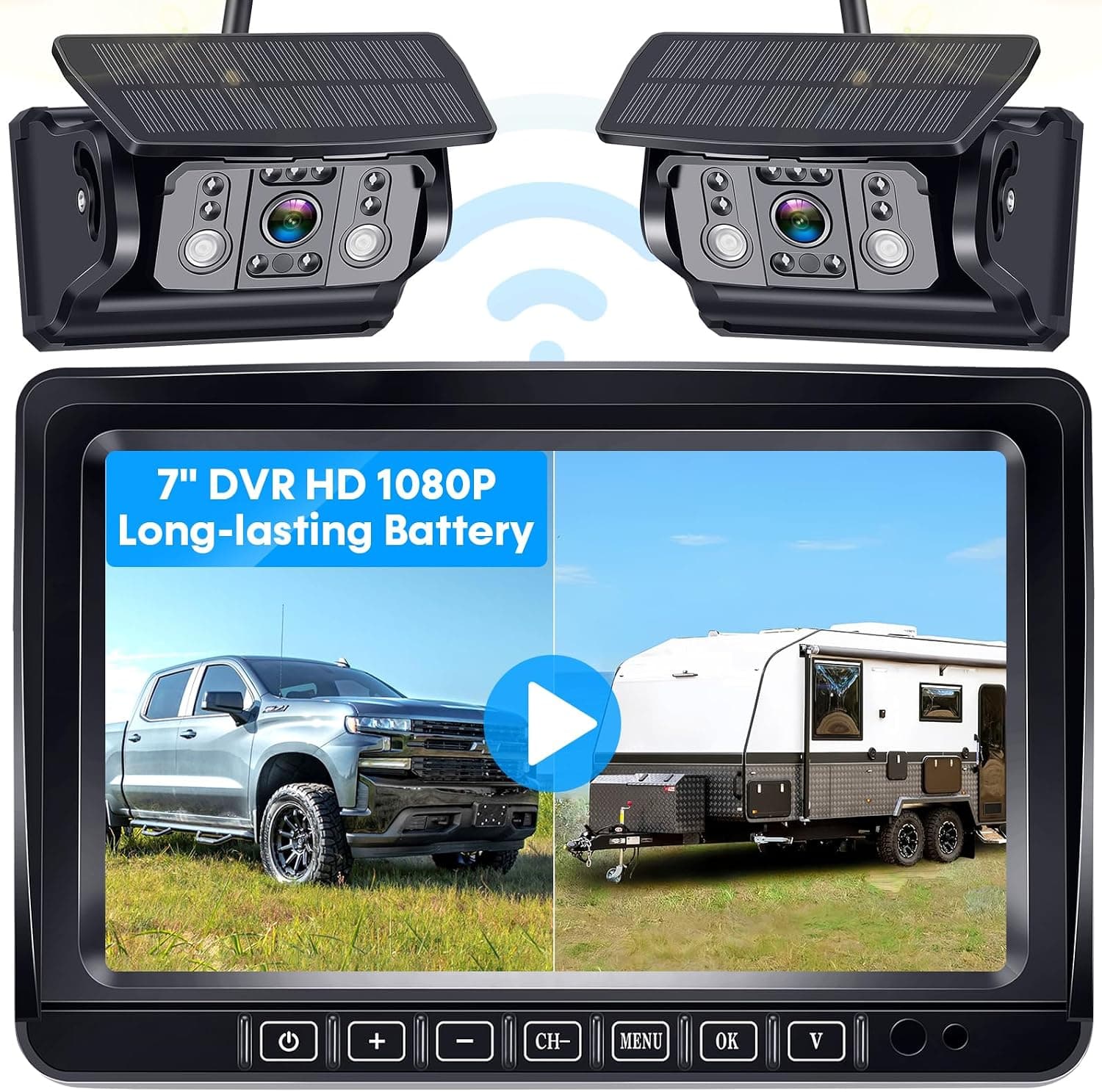
A dual solar wireless RV backup camera kit with strong magnetic mounts, 7-inch recording monitor, 4 channels and HD 1080P.
Price range: $ (Budget)
What we liked
- + Solar powered cameras avoid running power cables to the rear
- + Strong magnetic mounts let you move cameras between vehicles
- + Dual cameras cover the hitch and rear of the trailer at once
Trade-offs
- - Magnetic mounts need a steel surface and can shift on rough roads
- - Solar cameras may run low after several cloudy days
Who This Camera Kit Fits
This kit is aimed at trailer, fifth wheel and camper owners who want rear visibility without running a wire from the cab to the back of the rig. Because it includes two cameras and supports up to four, it suits drivers who want to watch both the hitch area during coupling and the road behind the trailer while driving, rather than a single fixed camera covering only one angle. The strong magnetic mounts are meant for setups where a permanent screw mount is not practical, such as a trailer owner who wants to move the cameras to a different vehicle later. It is less suited to rigs without enough flat steel surface for a secure magnetic hold.
Cameras, Range and Battery Explained
The 7 inch monitor records footage and displays a 1080P HD picture from up to two included cameras, with support for expanding to four if a driver adds more units later. Video and control signals run over a 2.4G wireless connection with dual antennas, which the manufacturer states can hold a stable link up to 328 feet in open areas, more than enough distance for even a long trailer and tow vehicle combination. Power for the cameras comes from a 15000mAh battery that the manufacturer rates for up to 25 hours of use per charge, topped up by a 3W solar panel so the cameras do not need to be removed for charging between trips. Adjustable parking guide lines overlay the monitor to help judge distance while backing up.
Mounting and Living With the System
Setup involves attaching the cameras to a steel surface using their magnetic base, aiming them toward the hitch or the road behind the trailer, and pairing them with the monitor, a process marketed as easy setup without drilling or wiring. Day to day, the solar panel is meant to keep the battery topped up during daylight towing and parking, with the 15000mAh capacity acting as a buffer through cloudy stretches or overnight stops. Because the mount is magnetic rather than bolted, owners towing on rough gravel, washboard roads or with heavy vibration should check the cameras periodically to confirm they have not shifted position, and clean the magnetic contact points to keep the hold strong.
Trade-offs and How It Compares
The main trade-off is the magnetic mounting itself. It makes the cameras easy to move between vehicles, but it depends on a flat steel surface and a firm magnetic connection, which can loosen on rough roads in a way that a permanently mounted or Furrion pre-wired camera would not. Buyers who tow mostly on paved roads should find the magnets reliable, while those who spend more time on washboard forest roads may prefer a bolted or pre-wired system such as competing Furrion compatible kits in the same category. Solar charging also depends on the cameras getting real sunlight, so a rig stored in shade or towed through several overcast days may lean more heavily on the battery reserve. Owners deciding between this kit and a pre-wired system should weigh how often they tow on rough terrain against how much they value being able to move the cameras to another vehicle later.
Verdict and Who Should Pick a Different Kit
This kit fits owners who want a flexible, wireless dual camera system that can be moved between a trailer and other vehicles without drilling holes. Drivers who tow mainly on rough, unpaved roads or who want a fixed, pre-wired connection should weigh a bolted or Furrion pre-wired camera system instead, since magnetic mounts are more exposed to vibration. For most paved and light gravel towing, the solar assisted battery and dual camera coverage make this a practical, low installation option. Buyers should still check that their trailer or truck offers enough flat steel surface near the hitch and rear bumper before counting on the magnets to hold securely.
Frequently asked questions
Do the cameras need a permanent wiring install?
No. The cameras attach with strong magnetic mounts and connect wirelessly to the monitor, so no drilling or cable run to the rear of the rig is needed.
How long does the camera battery last?
The manufacturer rates the 15000mAh battery for up to 25 hours of use per charge, with a 3W solar panel to help keep it topped up.
Can more than two cameras be added?
Yes, the system supports up to four cameras, so a second pair can be added later for wider coverage.
What surface do the magnetic mounts need?
The cameras rely on a magnetic connection, so they need a flat steel surface to hold securely, and can shift on rough roads if that contact loosens.
Prices change often, so check the current price and availability on Amazon.
Check price on AmazonRV Upgrade Hub may earn a commission from the link above.