REDARC Tow-Pro Liberty Electric Trailer Brake Controller, Universal Fit for 1 to 2 Axle Cars, Trucks, SUVs, Proportional Braking, 12V Review (2026)
Updated September 14, 2026 · Research-based review
Our verdict
A refined proportional brake controller for owners towing a single-axle or two-axle trailer who want smooth, natural stops and a discreet dash-mounted knob instead of a bulky box. The main catch is that a vehicle-specific wiring harness is usually a separate purchase, and it does not extend to larger multi-axle trailers.
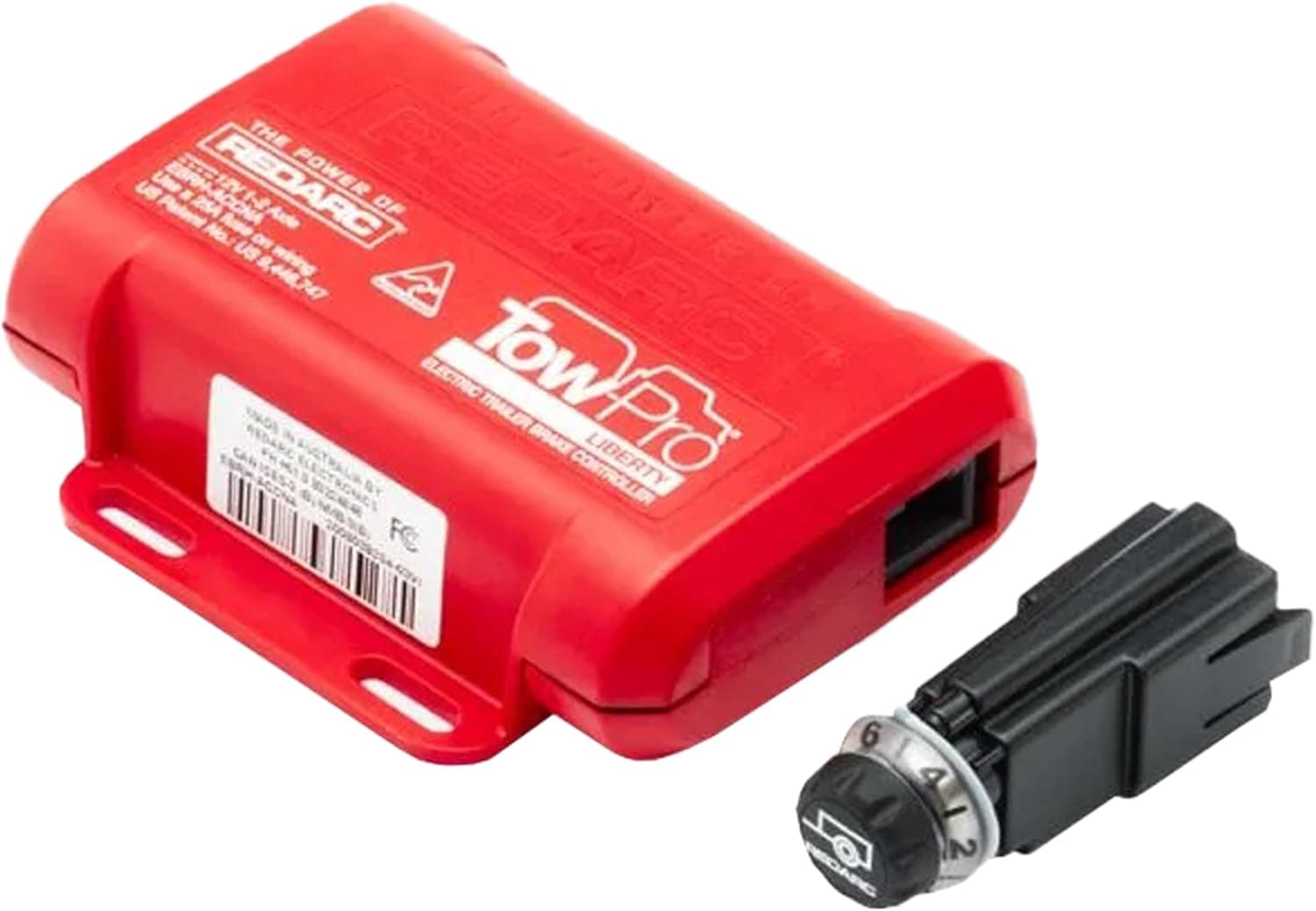
REDARC's Tow-Pro Liberty proportional electric trailer brake controller, universal fit for 1 to 2 axle trailers on 12V vehicles.
Price range: See on Amazon
What we liked
- + Proportional braking gives smooth, natural trailer stops
- + Compact remote knob mounts neatly without a bulky dash box
- + REDARC is a respected towing and power electronics brand
Trade-offs
- - Limited to 1 to 2 axle trailers, not larger multi-axle rigs
- - Needs a vehicle-specific harness purchased separately in many cases
Who this controller is for
The Tow-Pro Liberty is built for owners towing a single trailer with one or two axles, whether that is a travel trailer, boat trailer, or utility trailer behind a car, truck, or SUV with a 12 volt electrical system. REDARC positions it as a step up from basic time-delay controllers, aimed at drivers who want the trailer brakes to respond proportionally to how hard the tow vehicle is braking rather than applying a fixed preset force. Owners with larger trailers carrying three or four axles need a different controller entirely, since this unit's compatibility stops at two axles. Anyone comfortable running their own wiring, or willing to source a vehicle-specific harness, will get the most out of the compact, low-profile design.
How the proportional braking and calibration work
A three-axis accelerometer inside the main unit senses vehicle deceleration in any direction, which is what lets REDARC mount the controller box itself in essentially any orientation behind the dash rather than requiring a level, forward-facing position like older tilt-sensor designs. Active calibration is designed to be simple, running through a one-time setup as soon as the vehicle starts moving, with or without a trailer attached, rather than requiring a manual test-and-adjust process. The result is meant to be a smoother, more natural-feeling stop that mimics how the tow vehicle itself is braking, reducing the jerky feel that fixed-output controllers can produce, particularly noticeable at lower speeds or in stop-and-go traffic.
Living with the compact remote head
Rather than a bulky box mounted visibly on the dash, the Tow-Pro Liberty uses a small remote head connected to the main controller unit by roughly a one meter cable, so the visible dash footprint is limited to a compact knob rather than a full controller housing. The main unit itself is lightweight at about 7 ounces and can be tucked out of sight, which matters for owners who want a clean dash without a large accessory box in view. The system operates across a 9 to 16 volt range with a 12V nominal rating, and REDARC backs it with a two year limited warranty, longer than some entry-level competitors in this guide offer.
Trade-offs and how it compares with rivals here
Against the Timilge controller in this guide, which supports 1 to 4 axle trailers with an LED screen display, this REDARC unit covers a narrower 1 to 2 axle range but comes from a brand with a longer track record in towing and power electronics. Compared with plug-and-play options like the LeleoCar controller built for direct compatibility with certain factory harnesses, the Tow-Pro Liberty more often needs a vehicle-specific harness purchased separately, which adds to the real cost of getting it installed and working. Buyers should check REDARC's harness compatibility list for their specific tow vehicle before ordering, since installation complexity varies significantly depending on what wiring is already in place.
Bottom line
This controller earns the top spot in this guide for its proportional braking feel, flexible any-orientation mounting thanks to the three-axis accelerometer, and a compact remote head that keeps the dash uncluttered. The narrower 1 to 2 axle compatibility and the likely need for a separate wiring harness are the clearest trade-offs against multi-axle rivals in this guide. For owners towing a single- or dual-axle trailer who want smooth, natural-feeling stops and are willing to handle a proper harness installation, this remains a strong pick, while anyone with a larger trailer or a tight budget for harness costs should compare the other options here first.
Frequently asked questions
Does this brake controller work with trailers that have more than two axles?
No, REDARC rates the Tow-Pro Liberty for trailers with one or two axles. Larger multi-axle trailers need a different controller, such as some of the higher-axle-count rivals in this guide.
Do I need to buy a separate wiring harness?
In many cases yes, a vehicle-specific harness is typically purchased separately to connect the controller to your tow vehicle's wiring, so check REDARC's compatibility list for your specific vehicle before ordering.
How does the controller calibrate itself?
It uses an active calibration process that runs automatically as soon as you start driving, with or without a trailer connected, rather than requiring a manual test-and-adjust setup.
Can the main controller unit be mounted in any position?
Yes, a built-in three-axis accelerometer senses deceleration regardless of orientation, so the main unit does not need to be mounted level or facing forward like some older tilt-sensor controllers.
Prices change often, so check the current price and availability on Amazon.
Check price on AmazonRV Upgrade Hub may earn a commission from the link above.