Jackery Explorer 1000 v2 Portable Power Station, 1070Wh, 1500W, LiFePO4 Battery, 100W USB-C, Solar Generator for RV Review (2026)
Updated September 20, 2026 · Research-based review
Our verdict
Jackery's Explorer 1000 v2 packs a 1070Wh LiFePO4 battery into a 24 pound case with a 1500W output, enough to run fans, lights and a small fridge overnight or handle a coffee maker for short bursts. It charges to full in about an hour on AC, but it is too heavy to carry far and cannot run a rooftop AC for any real length of time.
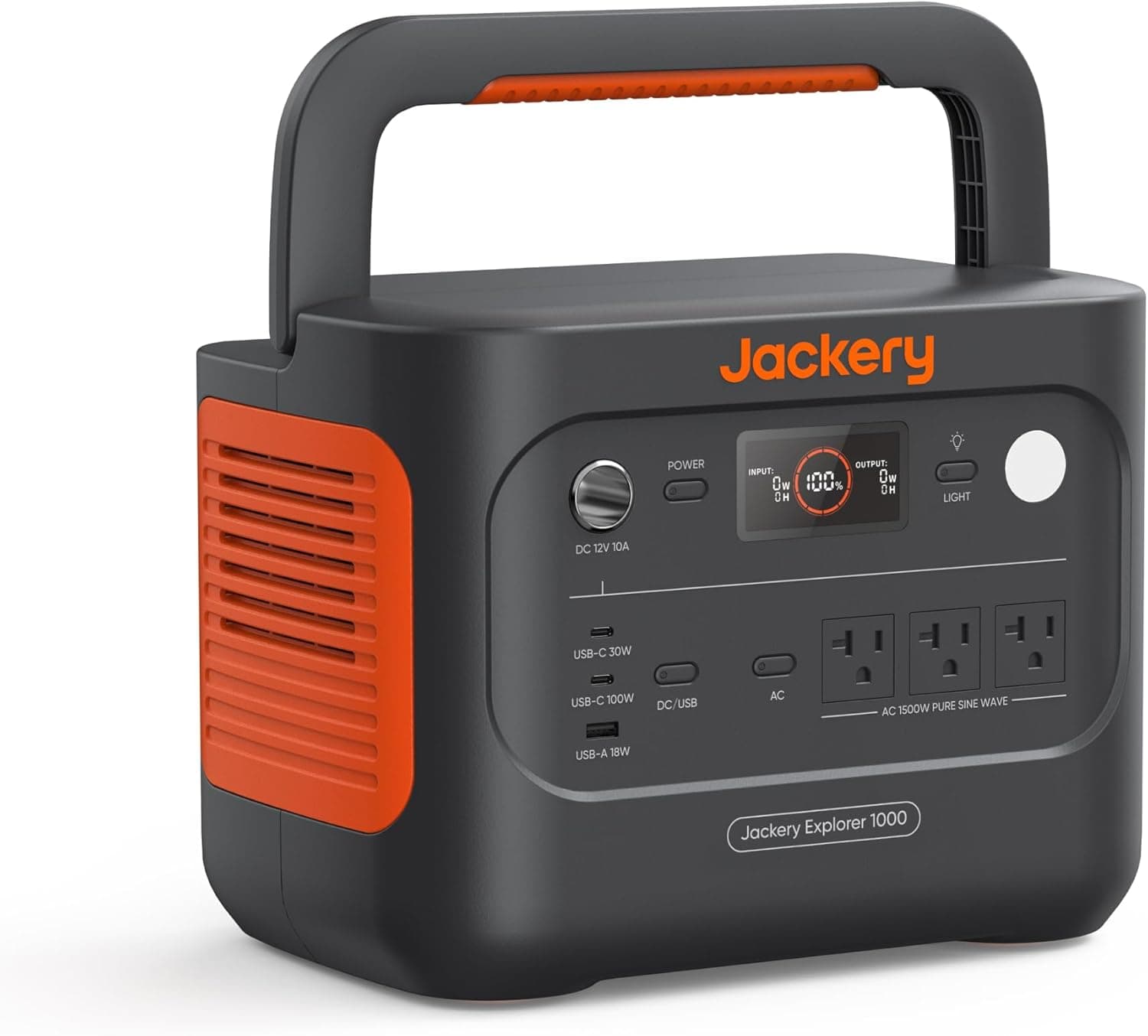
Jackery's Explorer 1000 v2 portable power station with 1070Wh LiFePO4 battery, 1500W output and 100W USB-C, for RV use.
Price range: See on Amazon
What we liked
- + 1070Wh capacity runs fans, lights and a small fridge overnight
- + 1500W output handles coffee makers and other short high-draw loads
- + LiFePO4 cells last many more cycles than older lithium-ion stations
Trade-offs
- - Too heavy to carry far compared with smaller portable stations
- - Cannot run a rooftop air conditioner for long on battery alone
Capacity and output
The Explorer 1000 v2 holds 1070Wh of usable energy in a LiFePO4 battery pack and can output up to 1500W continuously, with Jackery rating surge capacity at 3000W for appliances that draw a brief higher spike at startup. That combination covers running small RV appliances like fans, lighting, a laptop and a mini fridge for an extended stretch, and it can handle short-duration high-draw devices such as a coffee maker or an electric kettle, though sustained high-wattage loads will draw the battery down considerably faster than lighter electronics draw it down over the course of an evening.
LiFePO4 battery chemistry
Jackery moved to a LiFePO4 cell chemistry for this v2 model rather than the older lithium-ion NMC cells used in some earlier portable power stations, and LiFePO4 batteries are generally rated for meaningfully more charge cycles before capacity noticeably degrades, along with a lower risk of thermal runaway. That longer cycle life matters for an RVer who plans to charge and discharge the unit regularly across a camping season rather than using it only a handful of times a year, since the battery should hold up to that heavier use pattern better than older lithium-ion chemistries typically manage over the same number of years.
Weight and portability
At about 24 pounds, the Explorer 1000 v2 is not a light unit to carry any distance, and Jackery gave it a foldable handle to make moving it around the RV or between the rig and a picnic table more manageable, but it is still heavier than smaller power stations in the same lineup with less capacity. For someone who mainly moves the unit from a storage spot to a fixed position once per stop, that weight is a minor inconvenience; for someone hoping to regularly carry it any real distance, such as to a distant campsite or a boat launch, the weight becomes a bigger factor in daily use and worth weighing against a smaller, lighter model.
Charging speed and solar input
Jackery states the unit can reach a full charge in roughly one hour on AC power under the right conditions, which is fast compared with many portable power stations that take several hours, and that speed matters for RVers who only have a short window of shore power or generator time before moving on to the next stop. The unit also accepts solar charging input, letting it recharge from the sun at a campsite without shore power, though solar charging speed depends heavily on panel wattage, sun angle and weather rather than matching the fast AC charge time consistently.
What it cannot do
Despite its capacity, a 1070Wh power station is not sized to run a rooftop RV air conditioner for any meaningful length of time, since AC units typically draw far more continuous wattage than this unit's battery can sustain for more than a few minutes at most. Buyers looking to run air conditioning off-grid need a much larger battery bank or a generator instead, and should think of the Explorer 1000 v2 as a solution for lighter loads: charging devices, running a fan or fridge, or backing up essential electronics overnight, not as a replacement for shore power or a generator on a hot afternoon.
Frequently asked questions
Can the Jackery Explorer 1000 v2 run an RV air conditioner?
Not for any meaningful length of time. Rooftop AC units draw far more continuous power than this unit is built to sustain, so it suits lighter loads like fans, lights and a small fridge instead.
How long does it take to charge?
Jackery states it can reach a full charge in about one hour on AC power under the right conditions, and it also accepts solar panel charging, which is slower and depends on sunlight.
How heavy is the unit to carry?
It weighs about 24 pounds with a foldable handle, manageable for moving between a storage spot and a fixed position but not light for carrying any real distance.
What battery chemistry does it use?
A LiFePO4 battery, which is generally rated for more charge cycles and a lower thermal runaway risk than the older lithium-ion NMC cells used in some earlier power stations.
Prices change often, so check the current price and availability on Amazon.
Check price on AmazonRV Upgrade Hub may earn a commission from the link above.