GIANDEL 2000 Watt Pure Sine Wave Power Inverter 12V DC to 120V AC for RVs Off Grid Solar Boat Camper with 20A Hardwire Block and USB-C PD30W Review (2026)
Updated September 21, 2026 · Research-based review
Our verdict
A capable inverter for RVers who want to run sensitive electronics and hardwire a small circuit of outlets through the RV's existing wiring. The pure sine wave output and USB-C fast charging are useful daily conveniences, but running the heavy battery cables and fuse the hardwire block needs adds real installation cost and effort.
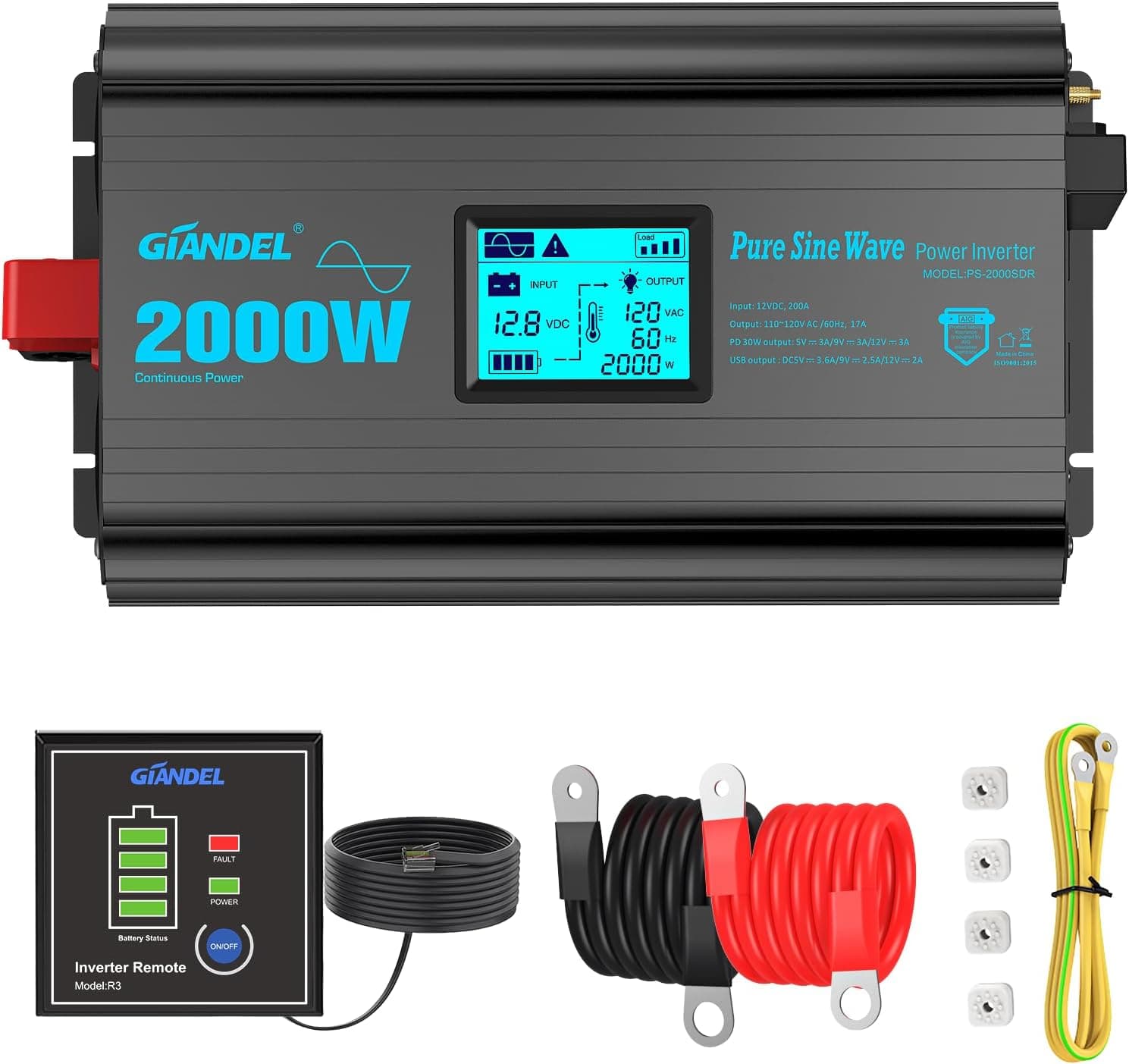
GIANDEL's 2000 Watt pure sine wave inverter, 12V DC to 120V AC, with a 20A hardwire block and USB-C PD30W for RVs.
Price range: See on Amazon
What we liked
- + 20A hardwire block lets you feed RV outlets through a transfer setup
- + USB-C PD30W charges laptops and phones directly
- + Pure sine wave output is safe for sensitive electronics
Trade-offs
- - Needs heavy battery cables and a fuse, which add install cost
- - Idle draw can drain a small battery bank if left on overnight
Pure sine wave output for sensitive electronics
This GIANDEL inverter produces pure sine wave AC power, which closely matches the clean power delivered by the grid, unlike cheaper modified sine wave inverters that can cause humming, reduced efficiency, or even damage in sensitive electronics like laptops, CPAP machines, and some battery chargers. For an RV, this matters because many owners are running exactly this kind of equipment, and a pure sine wave inverter avoids the compatibility issues that show up with modified sine wave units on certain devices. The 2000 watt continuous rating covers most common RV loads like a microwave, coffee maker, or laptop charging simultaneously, though it will not run a rooftop air conditioner.
20A hardwire block and outlet options
In addition to standard AC outlets, this inverter includes a 20 amp hardwire terminal block, letting it be wired directly into a transfer switch or a dedicated circuit rather than only powering devices plugged into its own outlets. This setup is what allows the inverter to power specific RV outlets or circuits through the rig's existing wiring, which is more involved to install than simply plugging appliances into the inverter's face, but gives a more integrated result once it is done. Planning which circuits will run off the inverter versus shore power is worth doing before installation begins, ideally with the help of a wiring diagram for your specific RV layout.
USB-C PD30W and everyday charging
A USB-C port rated at 30 watts of power delivery is built in alongside the AC outlets, letting laptops, tablets, and phones charge quickly and directly from the inverter without needing a separate AC adapter plugged into one of the outlets. This is a genuinely useful addition for RVers who want to reduce clutter around a small counter or charging station, since one inverter can cover both AC devices and fast USB-C charging for modern electronics that increasingly rely on that connector. Mounting the inverter somewhere accessible makes this everyday charging port far more convenient than one buried in a cabinet.
Installation costs to plan for
Running a 2000 watt inverter at 12 volts means the DC-side current draw is high, which requires heavy-gauge battery cables and an appropriately sized fuse or circuit breaker close to the battery to safely handle that current and protect against a short circuit. These parts are not necessarily included with the inverter itself and add real cost and complexity to installation beyond the price of the unit. Anyone installing this inverter should budget for correctly sized cabling and overcurrent protection as part of the total project rather than assuming the inverter is a simple plug-and-play addition, since undersized cabling is a common and avoidable installation mistake.
Idle draw and battery management
Like most inverters of this size, this unit draws some standby power even when no load is connected, so leaving it switched on overnight with nothing plugged in can slowly drain a small battery bank over time. RVers running a modest single-battery setup should get in the habit of switching the inverter off, or using its remote if equipped, when it is not actively needed, rather than leaving it powered continuously. Pairing the inverter with a battery monitor helps catch this kind of parasitic drain before it becomes a dead-battery surprise, especially during storage periods when nobody is checking on the RV daily.
Frequently asked questions
Can this inverter run a laptop and CPAP machine safely?
Yes, it produces pure sine wave power, which is compatible with sensitive electronics like laptops and CPAP machines, unlike modified sine wave inverters.
What is the 20A hardwire block used for?
It lets the inverter be wired directly into RV circuits or a transfer switch instead of only powering devices plugged into its face outlets.
Does it charge USB-C devices quickly?
Yes, it includes a USB-C port rated at 30 watts of power delivery for fast charging phones, tablets, and laptops.
What extra parts are needed to install it?
Heavy-gauge battery cables and a properly sized fuse or breaker near the battery are needed and are not necessarily included with the inverter.
Prices change often, so check the current price and availability on Amazon.
Check price on AmazonRV Upgrade Hub may earn a commission from the link above.