Westinghouse 12000 Peak Watt Dual Fuel Portable Inverter Generator, Remote Electric Start, Transfer Switch Ready, Gas and Propane Powered, Parallel Capable, CO Sensor Review (2026)
Updated September 14, 2026 · Research-based review
Our verdict
This Westinghouse dual fuel generator puts out 12000 peak and 9000 running watts, enough to run two RV air conditioners plus other loads, and its transfer switch ready 50A outlet lets it double as home backup power. It is a heavy, large unit better suited to big coaches with real power demands than smaller trailers on light loads.
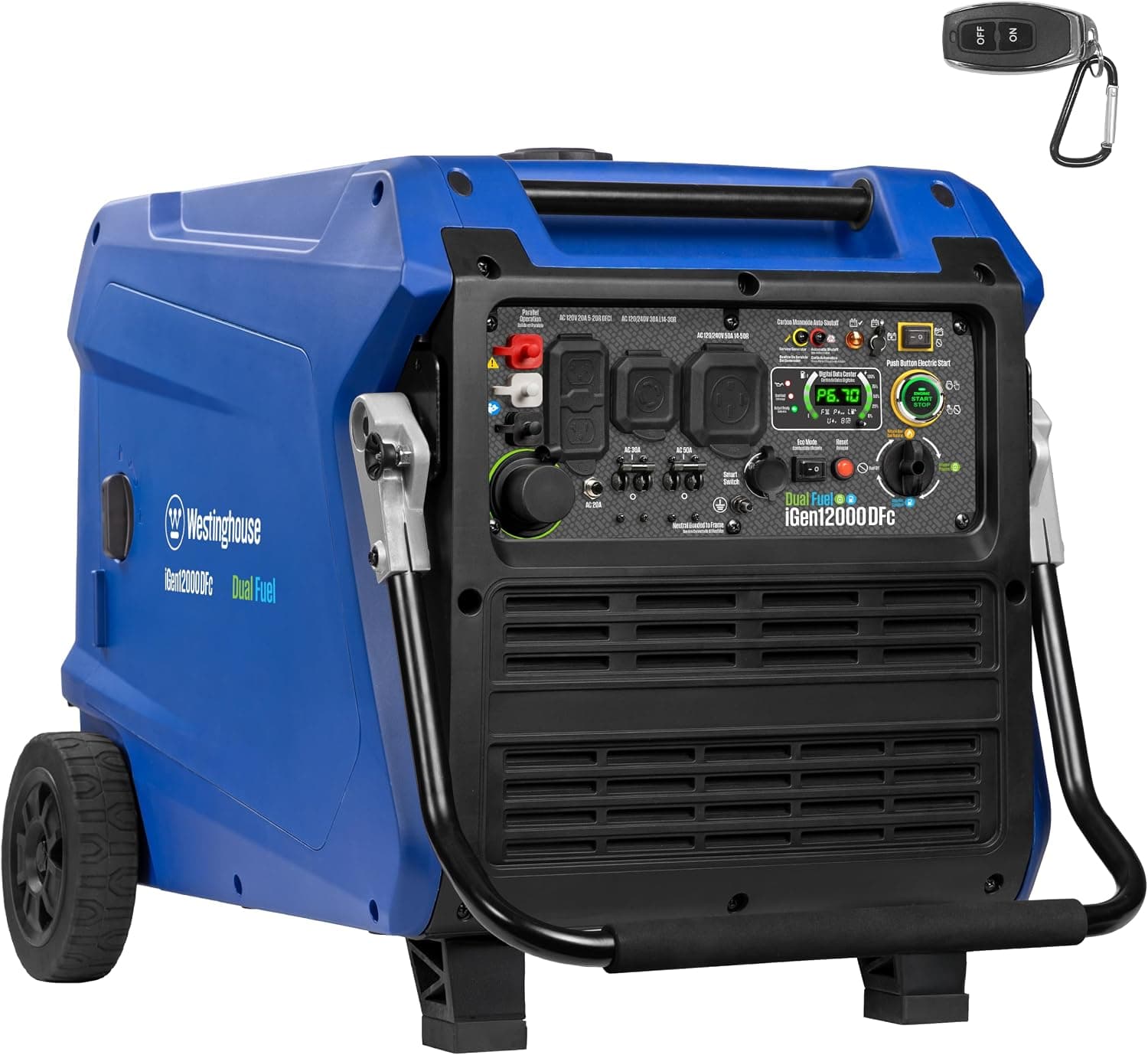
Westinghouse's 12000 peak watt dual fuel inverter generator with remote electric start, transfer switch ready outlet and CO sensor.
Price range: See on Amazon
What we liked
- + 12000 peak watts can run two air conditioners on large motorhomes
- + Transfer switch ready, so it doubles as home backup power
- + Remote electric start plus dual fuel makes daily use easier
Trade-offs
- - Very heavy unit that needs a ramp or lift to move
- - Oversized for small trailers and costly to run on light loads
Who needs this much generator
Owners of large Class A or Class C motorhomes running two air conditioners, or anyone who also wants a single generator that can back up a house during an outage, are the clearest fit for this unit. At 12000 peak and 9000 running watts on gasoline, it has enough headroom to start and run a large coach's major appliances at once, something smaller inverter generators in the 2000 to 4000 watt class cannot do. The transfer switch ready design means the same generator can plug into a home's transfer switch setup, giving RV owners who also want storm preparedness a dual purpose tool rather than a second dedicated home generator. Weekend campers with a single small trailer and modest power needs are not the target buyer, since this generator is oversized, heavy, and more costly to run than the loads a small camper actually draws.
Power output, engine, and safety features
On gasoline the generator produces 12000 peak watts and 9000 running watts, dropping slightly to 11000 peak and 8100 running watts on propane, giving owners a choice depending on which fuel is more available at a given campsite. A 457cc four stroke OHV Westinghouse engine powers the unit, paired with a 7.9 gallon tank rated for up to 19 hours of runtime at 25 percent load, useful for overnight operation without refueling. Output stays under 3 percent total harmonic distortion, a power quality spec that matters for running sensitive RV electronics without risking damage from a dirty power signal. Noise drops as low as 64 decibels in Eco mode, quieter than many open frame generators though still audible at a campsite. Starting options include recoil pull, a built in electric starter, and remote start from an included key fob, and the unit ships with a CO sensor for carbon monoxide shutoff protection.
Running it day to day and on the road
Day to day operation benefits from the remote start key fob, letting an owner fire up the generator from inside the coach on a cold morning without walking out to a bay. The digital fuel gauge and auto low oil shutdown reduce the guesswork and risk of engine damage that older carbureted generators carried. Because the unit is large and heavy, moving it in and out of a basement storage bay is a two person job or requires a ramp, dolly, or lift gate rather than a simple one hand carry. Dual fuel flexibility means switching between gasoline and propane as conditions or availability dictate, useful for extended boondocking trips where propane may be easier to restock. Routine maintenance follows standard small engine care, oil changes, air filter checks, and periodic exercise of the unit, which keeps the engine and CO sensor system reliable for both RV use and emergency home backup duty.
Where smaller rivals make more sense
Against smaller rivals in the same generator guide, this Westinghouse unit sits at the high end of output and size. The Champion 4500 watt dual fuel model and Westinghouse's own 4000 and 5000 watt units are far more portable and better matched to a single trailer running one air conditioner and basic appliances, and both score competitively in this guide despite their smaller output. Westinghouse's own smaller iGen2550DFc trades power for genuine lightweight portability, a real consideration for anyone who has to lift a generator in and out of storage solo. What sets this 12000 watt unit apart is sheer capacity, the ability to run two air conditioners plus other loads simultaneously and to serve double duty as home backup power through its transfer switch ready design, a combination the smaller units in this guide cannot match.
Bottom line for big rigs and backup power
Choose this generator if you run a large coach with two air conditioners, want serious home backup capability from the same unit, or otherwise need genuine high output rather than a compact camping generator. The dual fuel flexibility, low THD rating, and remote start add real convenience on top of the raw power. Owners of smaller trailers with a single air conditioner and light electrical loads should look at Westinghouse's own smaller iGen4000DFcv or a similarly sized Champion unit instead, since carrying and running a 12000 watt generator for loads it was never sized to handle wastes both weight capacity and fuel. For big rigs and dual purpose RV plus home backup use, this generator earns its position near the top of the guide.
Frequently asked questions
Can this generator run two RV air conditioners at once?
With 12000 peak and 9000 running watts on gasoline, it has enough capacity for two air conditioners plus other typical RV loads together, though actual headroom depends on your coach's total electrical draw.
Can I use it as a home backup generator too?
Yes, it is transfer switch ready with a 50A outlet, letting the same unit serve as backup power for a home electrical panel setup as well as for RV use.
How long does it run on a full tank?
The manufacturer rates it for up to 19 hours at 25 percent load on its 7.9 gallon tank, with runtime dropping as load increases.
How heavy is it to move around?
Westinghouse does not list an exact weight in available specs, but the unit is large enough that most owners use a ramp, dolly, or lift gate rather than a one person lift in and out of a storage bay.
Prices change often, so check the current price and availability on Amazon.
Check price on AmazonRV Upgrade Hub may earn a commission from the link above.