EPEVER 40A MPPT Solar Charge Controller 98% Efficiency with MT50 Remote Display 12V/24V Auto for RV Marine Off-Grid (Tracer4210AN) Review (2026)
Updated September 20, 2026 · Research-based review
Our verdict
EPEVER's Tracer4210AN is a 40A MPPT solar charge controller with 12V/24V auto detection and a wired MT50 remote display bundled in. It suits RV solar owners who want to monitor charging from inside the rig, though running the display cable and reading the settings menu takes more setup effort than a simple PWM controller.
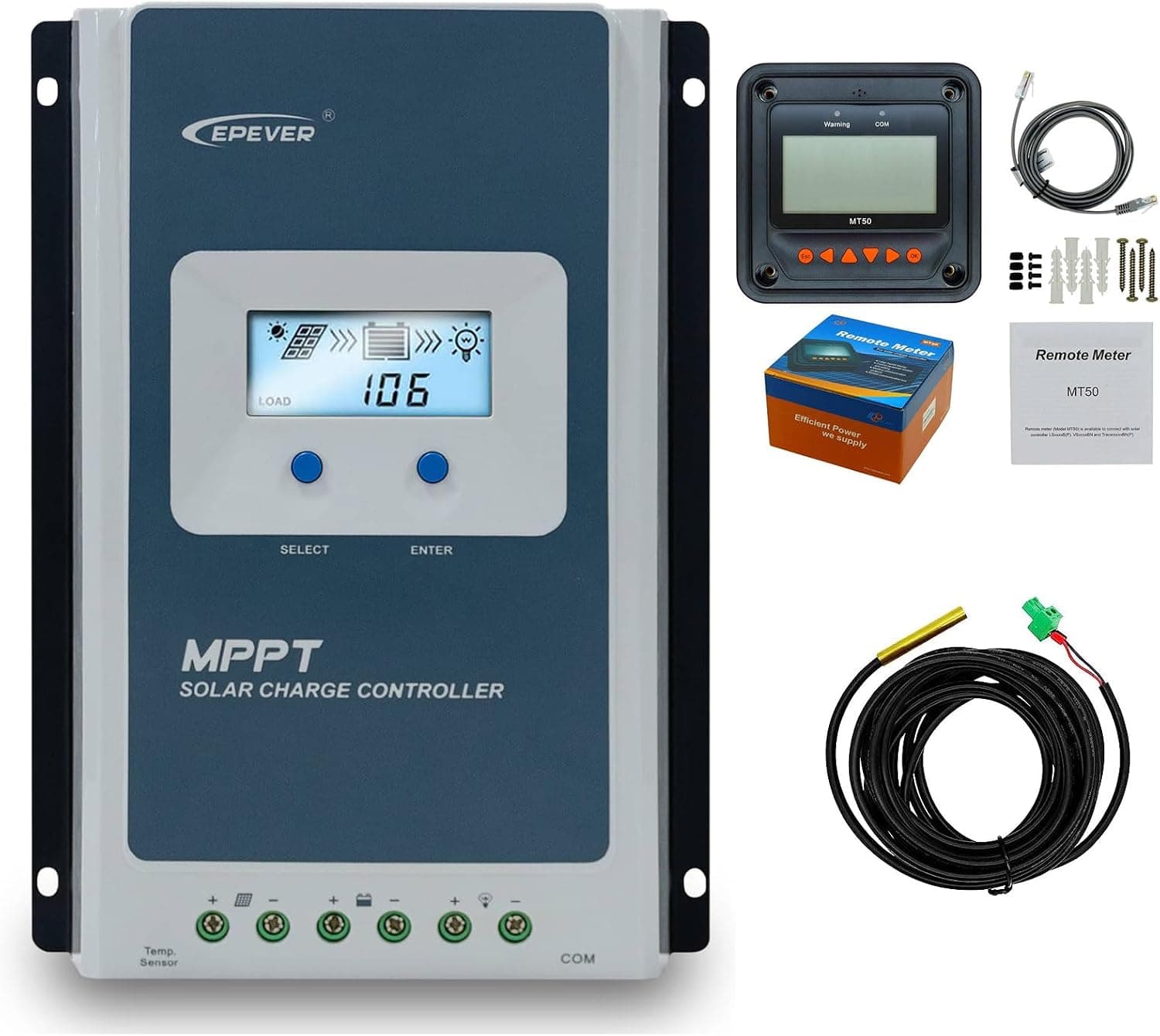
EPEVER's Tracer4210AN 40A MPPT solar charge controller with MT50 remote display and 98% efficiency, 12V/24V auto.
Price range: $ (Budget)
What we liked
- + MT50 remote display mounts inside the RV for easy monitoring
- + EPEVER Tracer controllers are widely used and well documented
- + 98% efficiency MPPT extracts more from roof panels
Trade-offs
- - MT50 display cable must be routed from the controller location
- - Settings menus can be confusing for first-time solar installers
MPPT charging and PV input
The Tracer4210AN charges at up to 40 amps and automatically detects 12V or 24V battery systems, using MPPT tracking that EPEVER rates at up to 98 percent efficiency to pull more usable power from roof panels than a simpler PWM controller would across varying sun and temperature conditions. Maximum PV open circuit voltage is rated at 100VDC, with maximum input power specified at 520W for a 12V battery bank and 1040W for a 24V bank, figures that determine how many panels and what wiring configuration a given RV solar array can safely use with this controller before exceeding its rated input. Exceeding the open circuit voltage rating, especially in cold weather when panel voltage rises, can damage the controller, so panel strings should be sized with that limit in mind during planning.
Battery type support
EPEVER lists support for four battery charging types on this controller: sealed, AGM and flooded lead-acid along with a user-defined and lithium setting, which covers both the older lead-acid house batteries still common in many RVs and the lithium battery banks increasingly used in newer solar setups. Selecting the wrong battery type in the settings can lead to undercharging or overcharging, so confirming the correct profile during setup matters more with a flexible multi-chemistry controller like this one than it would with a controller built for only one battery type from the factory.
MT50 remote display
This listing bundles EPEVER's MT50 remote meter, a separate backlit LCD display that mounts wherever is convenient inside the RV and connects back to the controller by a cable, so system voltage, charging current, and fault information can be checked without opening a compartment to view the controller itself. The MT50 is compatible with EPEVER's Tracer-AN and several other EPEVER controller series, and buying it bundled here saves sourcing it separately, since EPEVER also sells the MT50 on its own for owners who did not get one with their original controller purchase.
Housing and heat management
The controller uses a die-cast aluminum housing that EPEVER states is designed for efficient heat dissipation, relevant because MPPT controllers generate more internal heat during conversion than simpler PWM designs, and excess heat can reduce charging efficiency or trigger thermal protection if airflow around the unit is restricted. Mounting the controller with clear space around its housing, rather than wedged into a tight, unventilated cabinet, helps it maintain rated output during the hottest part of a sunny charging day, which is when a solar system's output typically peaks and heat buildup is most likely to matter.
Setup considerations
Because the MT50 display cable has to be run from wherever the controller is mounted, often near the batteries, to a visible spot for daily monitoring, installers should plan that cable route before finalizing where the controller itself gets mounted, since a long or awkward run is harder to add after the fact. EPEVER's settings menus cover multiple battery types and several load control modes, which gives an experienced installer flexibility but can be confusing on a first solar install without referencing the manual, so newcomers to DIY solar should budget extra time for the initial configuration rather than expecting a fully plug-and-play setup. Keeping the printed or downloaded manual on hand during that first setup makes the menu navigation considerably faster than guessing at each option from the display alone.
Frequently asked questions
What is the maximum charging current and battery voltage?
It charges at up to 40A and automatically detects 12V or 24V battery systems.
What battery types does it support?
EPEVER lists sealed, AGM and flooded lead-acid along with user-defined and lithium settings.
Does this listing include a remote display?
Yes, it bundles EPEVER's MT50 remote meter, a wired LCD display that can be mounted separately from the controller.
What is the maximum PV input this controller supports?
EPEVER rates it at up to 100VDC open circuit voltage, with maximum input power of 520W at 12V or 1040W at 24V.
Prices change often, so check the current price and availability on Amazon.
Check price on AmazonRV Upgrade Hub may earn a commission from the link above.