Kidde Fire Extinguisher for Boats, Single-Use 1A10BC, 2 Pack Review (2026)
Updated September 14, 2026 · Research-based review
Our verdict
A practical two-unit set for RVers who want a fire extinguisher within reach in both the kitchen and the bedroom without paying for a rechargeable model. The 1A10BC rating covers common household-type fires, but these are single-use units that must be replaced entirely after any discharge, which adds up over years of ownership.
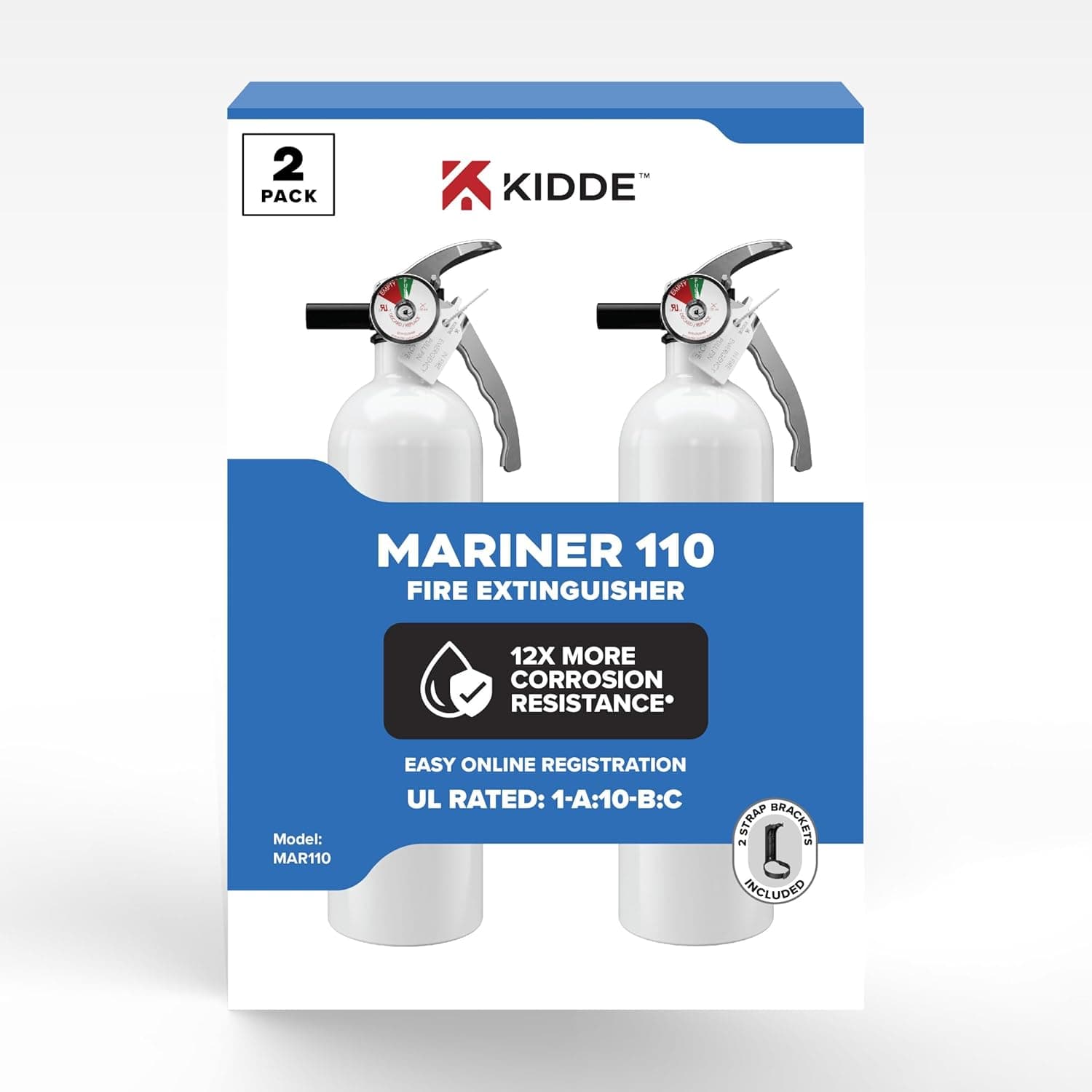
Kidde's single-use 1A10BC fire extinguisher for boats in a 2 Pack, covering two locations in an RV.
Price range: See on Amazon
What we liked
- + 2 Pack lets you place one in the kitchen and one by the bed
- + 1A10BC rating handles common household-type fires
- + Single-use design is simple with no maintenance to track
Trade-offs
- - Single-use units must be replaced after any discharge
- - Not rechargeable, so long-term cost is higher
Who this two pack suits
Fire safety guidance for RVs generally calls for at least one extinguisher near the kitchen and another near the sleeping area, since a rig's small footprint means a fire in one zone can quickly block the only exit. This two pack is built around that logic, giving owners two ready units instead of one, so both ends of a typical RV floor plan get covered. It suits owners who want a simple, no-maintenance solution and are comfortable replacing the unit entirely if it is ever used, rather than tracking down a recharge service. Owners of larger motorhomes with more square footage to protect may still want additional units beyond this pair positioned near entry doors or the engine bay.
What the rating and construction mean
The 1A10BC rating means each unit is built to handle Class A fires involving ordinary combustibles like wood, paper, and fabric, Class B fires from flammable liquids and gases, and Class C fires involving live electrical equipment, which together cover most of what could ignite inside an RV. Construction is lightweight aluminum with a corrosion-resistant metal valve assembly and an easy-to-read pressure gauge so owners can do a quick visual check that the unit is still charged. A steel handle and an easy-pull safety pin are built for fast activation under stress, following the standard pull, aim, squeeze, sweep method taught for these extinguishers. A strap bracket ships with each unit for mounting, making it straightforward to secure one within reach of the stove and one near the bed.
Living with a single-use extinguisher
Unlike rechargeable models, these units have no valve for professional refilling, so once discharged for any reason, even a small test spray, the unit is done and needs to be replaced outright. That simplicity cuts out any need to schedule a recharge visit, but it does mean a false alarm or a minor kitchen flare-up used as a precaution turns into buying a new unit. Owners should still check the pressure gauge periodically the same way they would on any extinguisher, and replace units after roughly a decade even if never discharged, since the internal chemical agent and seals degrade with age and temperature swings typical of RV storage. Mounting both units somewhere visible and unobstructed matters more than the extinguisher's rating in an actual emergency.
How it compares with rivals in this guide
Against the First Alert Marine1 also featured in this guide, which carries the same 1A10BC rating but is rechargeable by a certified professional after use, this Kidde two pack trades long-term reusability for the convenience of getting two units at once for less setup. Against the Kidde Mariner 110, a similar Coast Guard approved single unit from the same brand, this listing's advantage is simply having a second extinguisher included rather than needing a separate purchase to cover a second zone of the RV. Owners who tow a boat alongside their RV and want Coast Guard rated equipment for both uses should compare the Mariner-branded units specifically, since the marine approval matters for boat inspections in a way it does not for RV use alone.
Bottom line
This two pack earns our score of 8.6 out of 10 in this guide mainly on the strength of covering two locations in a typical RV floor plan for a single purchase, with a rating broad enough to handle the fire types most likely to start in a galley or near wiring. The main trade-off is the single-use design, which means any discharge, intentional or not, means a full replacement rather than a refill. Owners who expect to test or use an extinguisher more than rarely, or who want a unit that can be professionally serviced over many years, should weigh the rechargeable First Alert option instead. For most RVers who want dependable coverage in two spots with minimal upkeep, this pack does the job.
Frequently asked questions
Can these extinguishers be recharged after use?
No, these are single-use units. Once discharged for any reason they should be replaced entirely rather than refilled, unlike rechargeable models such as the First Alert Marine1 in this guide.
What kinds of fires does the 1A10BC rating cover?
It covers Class A fires from ordinary combustibles like wood and paper, Class B fires from flammable liquids and gases, and Class C fires involving live electrical equipment, which together span most common RV fire risks.
How long do these extinguishers last before they need replacing?
Even if never discharged, these types of extinguishers are generally recommended for replacement after about a decade, since internal pressure and chemical agent can degrade with age and temperature swings.
Where should the two units be placed in an RV?
A common approach is mounting one near the kitchen or galley and one near the sleeping area, so both zones of the RV have a unit within quick reach in an emergency.
Prices change often, so check the current price and availability on Amazon.
Check price on AmazonRV Upgrade Hub may earn a commission from the link above.