Westinghouse iGen2550DFc 2550 Peak Watt Super Quiet & Lightweight Portable Inverter Generator, RV Ready 30A Outlet, Gas and Propane Powered, CO Sensor, Parallel Capable Review (2026)
Updated September 20, 2026 · Research-based review
Our verdict
A 42 lb dual fuel inverter generator that runs on gas or propane and puts a 30A RV outlet, CO sensor, and clean inverter power in a package light enough for one person to carry to a campsite. Its 1,900 running watts on gas cannot start most rooftop air conditioners alone, so it suits lights, electronics, and a fridge rather than AC.
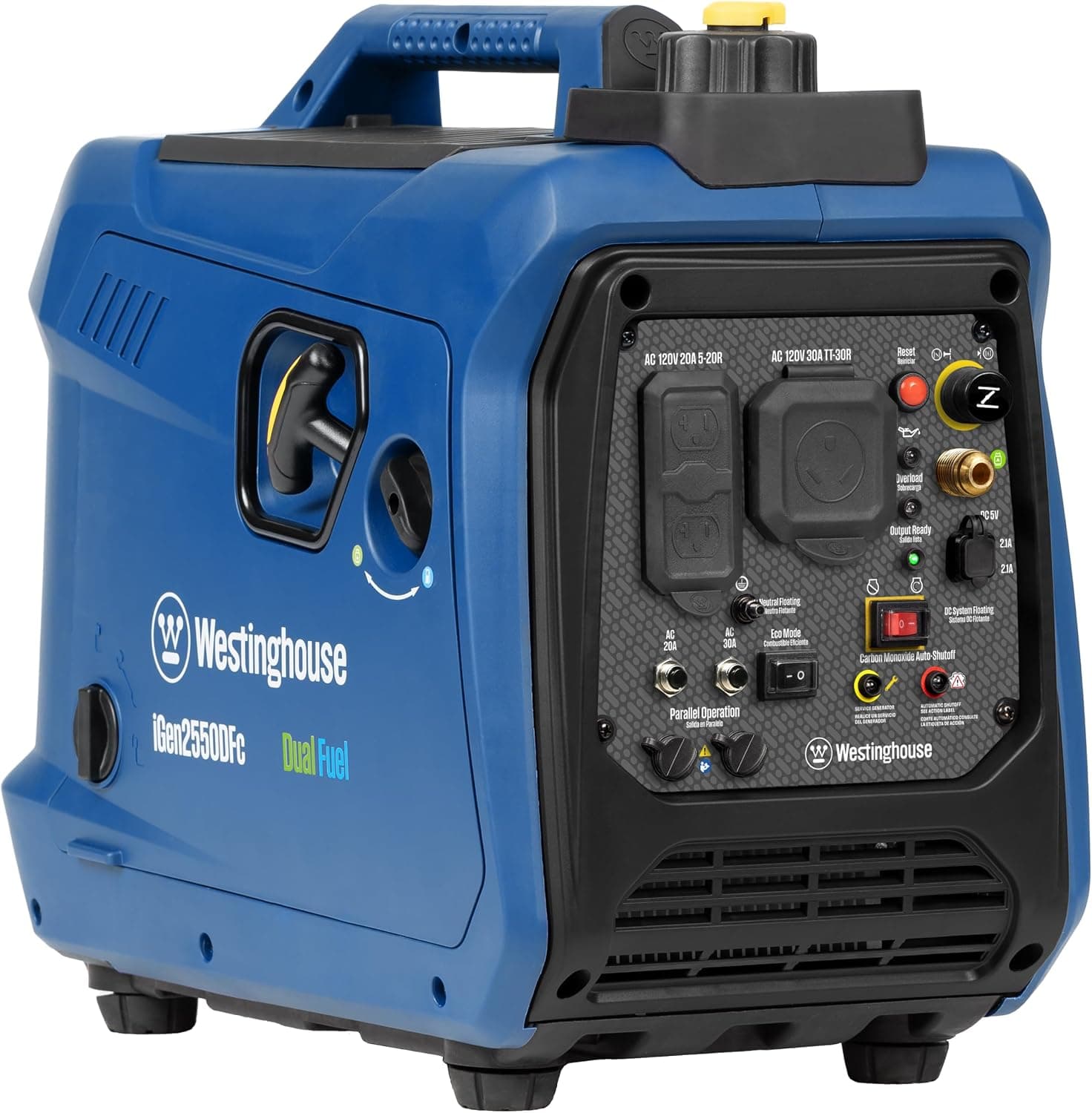
Westinghouse's iGen2550DFc dual fuel inverter generator with 2550 peak watts, a 30A RV outlet, CO sensor and parallel kit support.
Price range: See on Amazon
What we liked
- + Lightweight design is easy for one person to carry to camp
- + Runs on gas or propane, giving fuel flexibility on the road
- + CO sensor shuts it down if exhaust builds up near the unit
Trade-offs
- - 2550 peak watts struggles to start most rooftop air conditioners alone
- - Smaller fuel tank means more frequent refills on long days
What this generator delivers
The iGen2550DFc is a dual fuel portable inverter generator producing 2,550 peak and 1,900 running watts on gasoline, or 2,300 peak and 1,700 running watts on propane. It is built around an 80cc 4-stroke Westinghouse engine with a 1.1 gallon tank that runs roughly 11 hours at 25 percent load on gas, and considerably longer on propane, closer to 25 hours at that same light load. Inverter technology keeps output clean, at less than 3 percent total harmonic distortion, which matters for laptops, phone chargers, and other sensitive RV electronics that can be damaged by dirty power from a non-inverter generator.
Weight and portability
At about 42 lbs, this generator sits toward the lighter end of RV-ready portable inverter generators, light enough for one person to lift into a truck bed or storage bay without a hand truck. That portability is a tradeoff against total output, since heavier generators in the same guide reach 4,000 to 5,000 peak watts by using larger engines and tanks. For RVers who want to carry the generator in and out of storage regularly rather than leave it mounted, the lighter weight is a real advantage even though it caps what the unit can power at once.
Outlets and safety features
The control panel includes a TT-30R 30A outlet sized for direct RV connection, a standard 20A household duplex outlet, and two 5V USB ports for smaller devices. A built-in carbon monoxide sensor monitors CO levels near the unit and automatically shuts the generator down if levels become dangerous, which matters since CO poisoning from generators run too close to a camper or tent is a real risk. The generator also includes automatic low oil shutdown and overload protection, both standard safety features that prevent engine damage from running dry or drawing more current than the unit can supply.
What it can and cannot power
With 1,900 running watts on gas, this generator comfortably runs interior lights, a residential fridge, a laptop, a phone charger, and similar small loads, and it can run a rooftop RV air conditioner's electronics briefly, but 1,900 to 2,300 running watts is short of what most rooftop AC units need to start, since compressor startup surge alone often exceeds that. RVers wanting to run air conditioning off a portable generator typically need something in the 3,500 to 4,000 running watt class or a soft-start device on the AC unit, so this generator is better matched to boondocking without AC than to keeping a rig cool on a hot afternoon. Two units can also be linked with an optional parallel kit to combine output for larger loads, which is worth considering for owners who expect to need more power later without replacing the generator they already own.
Where it ranks against rivals
Among the RV generators in this comparison, the iGen2550DFc ranks fifth of six, behind larger Westinghouse and Champion models in the 4,000 to 5,000 peak watt range that can handle a rooftop AC unit or run more appliances at once. Its advantage over those larger units is weight and a lower price point, making it a reasonable choice for RVers whose main need is backup power for electronics and small appliances rather than climate control. Anyone planning to run AC off a portable generator should look further up this guide toward the higher-wattage options instead.
Frequently asked questions
Will this generator run my RV air conditioner?
Not reliably on its own. With 1,900 running watts on gas, it falls short of what most rooftop RV air conditioners need to start, so it suits lights, electronics, and a fridge rather than AC.
How long does the fuel tank last?
On gasoline, the 1.1 gallon tank runs about 11 hours at 25 percent load; on propane the same generator runs considerably longer, around 25 hours at that load.
Does it have a 30A outlet for direct RV hookup?
Yes, the control panel includes a TT-30R 30A outlet alongside a standard 20A household outlet and two USB ports.
What safety features does it include?
A built-in CO sensor that shuts the generator down if carbon monoxide builds up nearby, plus automatic low oil shutdown and overload protection.
Prices change often, so check the current price and availability on Amazon.
Check price on AmazonRV Upgrade Hub may earn a commission from the link above.