Tire Pressure Monitoring System, Large Screen RV Solar TPMS with 6 Tire Sensors, Real Time Monitor Alarm System for RV Trailer Truck Motorhome, 0-116PSI Review (2026)
Updated September 14, 2026 · Research-based review
Our verdict
A budget six-sensor TPMS with a large solar powered display, good for trailer and motorhome owners who want an easy-to-read alert screen on the dash. Its 0-116 PSI ceiling is the main limit, so check your tire pressure rating before buying, especially on a Class A coach.
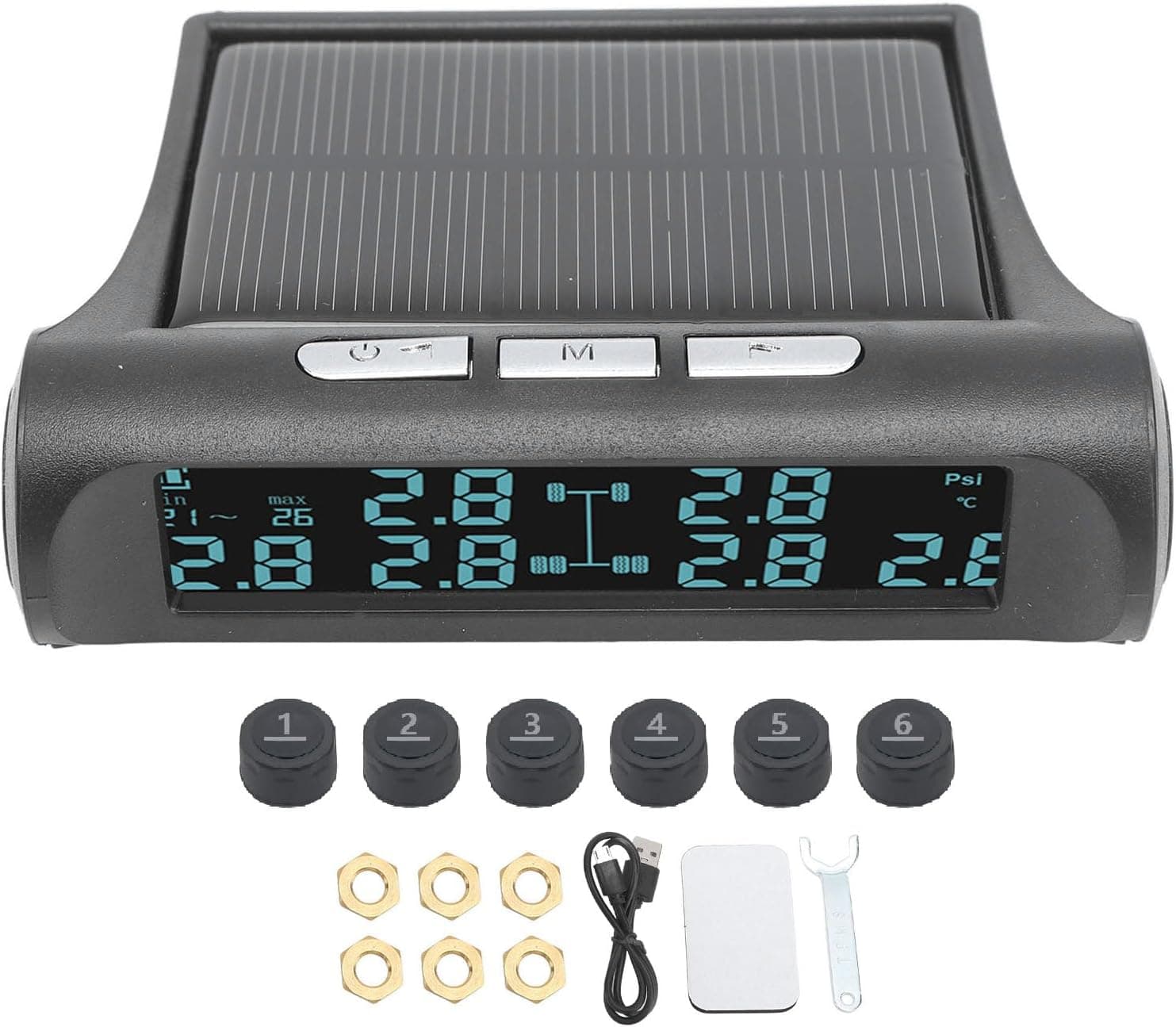
A large screen solar RV TPMS with 6 tire sensors and a real-time monitor alarm system for trailers, trucks and motorhomes.
Price range: $ (Budget)
What we liked
- + Large screen makes alerts easy to see while driving
- + Solar powered display keeps cords off the dashboard
- + Real-time alarm warns quickly about fast leaks
Trade-offs
- - Lower maximum pressure range may not suit high-pressure coach tires
- - Generic brand with unclear support if a sensor fails
Who this TPMS suits
This system is built for RV, trailer, truck and motorhome owners who want six-tire coverage without paying for a premium brand. The large monitor is meant to be easy to glance at from the driver's seat, which matters most on tandem-axle trailers and dual-wheel setups where a small screen gets hard to read at speed. It is a reasonable starting point for someone who has never run a tire pressure monitor before and wants simple, visible alerts rather than a feature-heavy app-connected system. Owners of high-pressure Class A coaches should check their tire's rated pressure first, since this unit is not built for that upper range. For a standard travel trailer, fifth wheel or pickup running typical tire pressures, the coverage and screen size line up well with what most owners are looking for.
Specs explained in plain English
The listing states a monitoring range of 0 to 116 PSI (0 to 8 bar) with sensors rated accurate to about 1.5 PSI, so it reads close to what a hand gauge would show. The six external cap sensors thread onto each valve stem and are rated IP68, meaning they are sealed against dust and sustained water exposure, which matters since they sit exposed to road spray and weather. Power comes from a small solar panel on the monitor with a USB port as backup charging, so the screen does not need to be plugged in constantly on the dash. The monitor runs on 5V DC, keeping it compatible with any standard USB power source if the solar panel is not getting enough light on a shaded dash.
Living with it day to day
Setup is screw-on: each sensor threads onto a valve stem in place of the regular cap, and the monitor pairs with the sensors before your first drive. Once running, the solar panel is meant to keep the display topped up on sunny driving days, with the USB port there for cloudy stretches or overnight top-ups before a trip. The alarm system is built to flag both slow leaks and fast pressure drops in real time, which is the main reason to run a TPMS on a multi-axle trailer where a soft tire is hard to notice from the cab. Because the sensors are external cap types, adding air means removing the sensor first and reinstalling it afterward, which is a small extra step compared with flow-through designs.
Where it falls short and how it compares
The clearest trade-off is the 116 PSI ceiling. Rivals in the same six-sensor category, like the Antstone TPMS rated to 218 PSI and the B-Qtech system rated to 199 PSI, cover the higher pressures common on heavier Class A motorhomes and dually trucks, so they are the safer pick if your tires are rated above this unit's range. Both of those rivals score higher in this guide, partly on the strength of that wider range and partly on brand support. This system's generic branding also means warranty and replacement-sensor support are less certain than with a named brand, which matters if a single sensor fails years down the road and you need a matching replacement rather than a full new kit.
Verdict and who should look elsewhere
This is a fair pick for owners of a standard trailer or motorhome who want a large, easy-to-read six-tire monitor and do not need to track pressures above 116 PSI. If your coach runs higher-pressure tires, or if you want a documented brand with clearer support for a failed sensor, the higher-scoring Antstone or B-Qtech systems in this guide are the safer route even though this unit remains a workable entry-level choice for the right rig. Confirm your tire's rated pressure against the 116 PSI ceiling before ordering, since that single number is what decides whether this system or a higher-range rival is the right fit for your setup.
Frequently asked questions
What pressure range does this TPMS monitor?
The listing covers 0 to 116 PSI (0 to 8 bar), with sensors accurate to roughly 1.5 PSI.
How is the display powered?
A built-in solar panel charges the monitor, with a USB port as a backup power source.
How many tires can it cover?
It includes six external cap sensors, enough for a tandem-axle trailer or a six-tire motorhome.
Will this work on a high-pressure Class A coach?
Not if your tires run above 116 PSI. Consider a rival rated to 199 or 218 PSI instead.
Prices change often, so check the current price and availability on Amazon.
Check price on AmazonRV Upgrade Hub may earn a commission from the link above.