RV Converter, Multiple Capacities RV Power Converter RV Battery Charger (75-AMP) Review (2026)
Updated September 14, 2026 · Research-based review
Our verdict
This unbranded 75 amp converter is a budget way to replace a dead or dimming factory unit, sold in several amperages to match your rig. Skip it for lithium batteries since no charging profile is listed, but for lead-acid house batteries it is a workable, inexpensive swap for a handy owner.
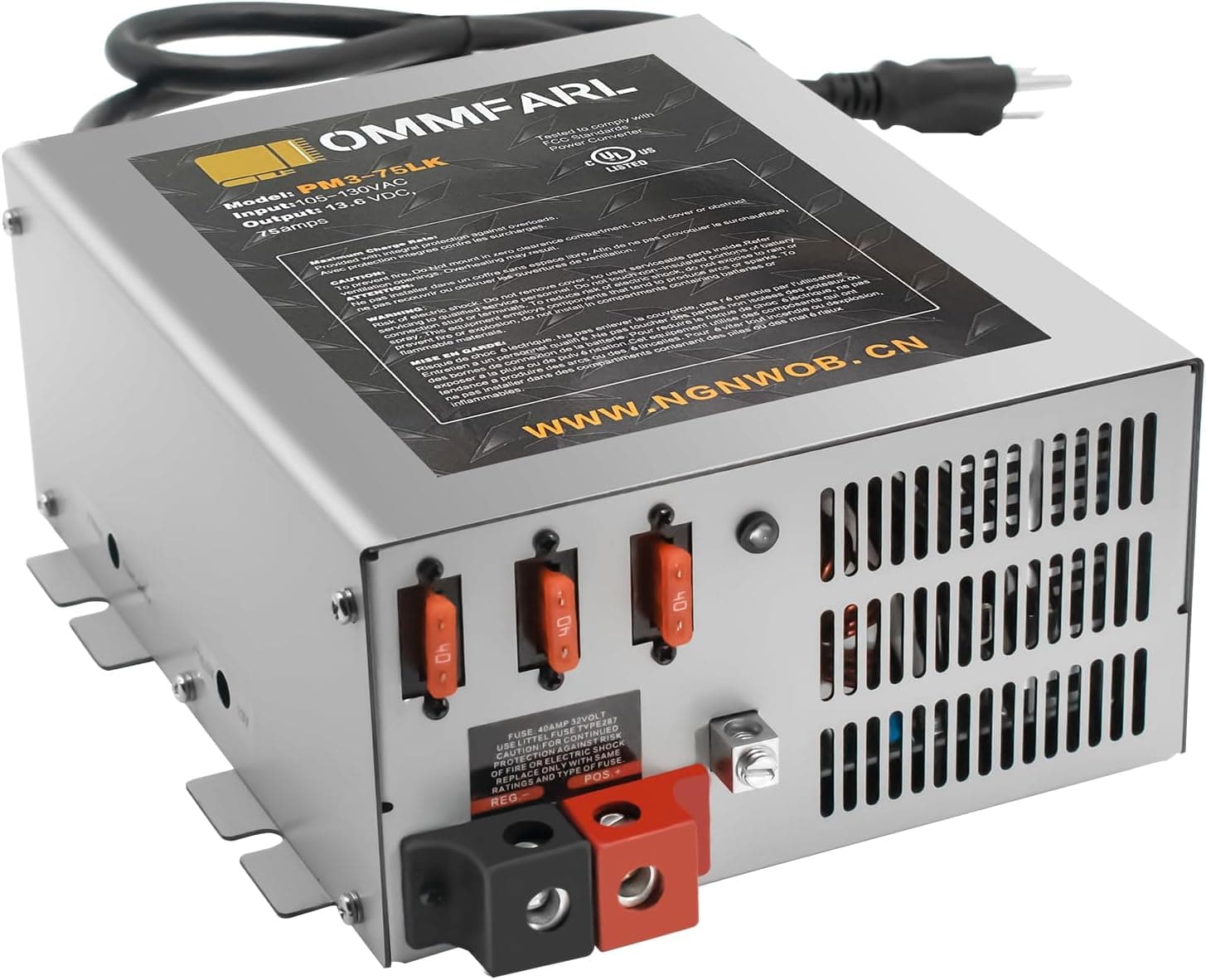
A 75-AMP RV power converter and battery charger, sold in multiple capacities to replace a failing onboard unit.
Price range: See on Amazon
What we liked
- + 75-AMP capacity runs house lights and fans while charging batteries
- + Multiple capacities let you match your original converter size
- + Direct swap can revive dim lights caused by a failing old unit
Trade-offs
- - Check the charging profile supports lithium batteries
- - Hardwired install requires basic electrical skill and care
What this converter is built to do
This is a 75 amp RV power converter and battery charger that takes 120V AC shore or generator power and steps it down to 12V DC to run interior lights, fans, the water pump and other 12V accessories while also charging the house battery. It is listed with a built-in 3-stage smart charging circuit, meaning it moves through bulk, absorption and float stages rather than dumping a single flat voltage into the battery the whole time it is plugged in. The listing offers the same basic design across several amperages, so a 45, 55, 65 or 75 amp version can be chosen to match the load and battery bank size of a given trailer or motorhome, which is the main selling point over a single fixed-capacity charger.
Matching capacity to your rig
Because this converter is sold in multiple capacities under one listing, the buying decision comes down to picking the amperage that lines up with the badge on your old unit or the total 12V draw of your rig. A 75 amp model like this one is aimed at larger travel trailers and fifth wheels with more lighting circuits, slide-out motors and a bigger house battery bank than a small camper needs. Going with too small a converter can leave batteries undercharged on hot days when fans and pumps run often, while oversizing rarely hurts as long as the unit fits the existing converter bay and wiring gauge. There is no brand name in the listing, so cross-check physical dimensions against your old converter before ordering.
Installing and living with it
This is a hardwired replacement, not a plug-in unit, so installing it means shutting off shore power, disconnecting the battery, and matching the AC input and DC output wiring to the old converter's terminals, which calls for basic comfort with 12V and 120V wiring rather than true electrical certification. Owners commonly buy this style of converter specifically because the factory unit is dying, showing symptoms like dim interior lights, slow-charging batteries or a converter that runs hot and shuts down. Once wired in correctly, the 3-stage charging cycle is meant to run in the background with no daily attention, though it is worth checking that the fan or heat sink has clear airflow in the converter compartment after installation.
Where it falls short of named-brand converters
The clearest gap next to rivals in the best RV battery chargers guide is the missing charging profile. Progressive Dynamics and PowerMax converters in the same guide publish a fixed or adjustable output voltage range and, in PowerMax's case, explicit lithium compatibility, none of which this listing states. If your RV runs LiFePO4 batteries, charging at a flat lead-acid profile can undercharge or fail to balance the pack, so this converter is safer treated as a lead-acid or AGM replacement until you can confirm otherwise with the seller. It also lacks the diagnostic charge-wizard style indicator lights that higher-scoring rivals include, so you get less visibility into which charge stage is active.
Who should buy this and who should not
This converter suits an owner who already knows the amperage of their failing factory unit, runs standard lead-acid or AGM house batteries, and wants a low-cost, direct swap without paying for a recognized brand name. It is a reasonable emergency or budget fix to get lights and charging working again on a trailer or motorhome. Owners with a lithium battery bank, or anyone who wants documented voltage settings and a warranty backed by a known manufacturer, should look instead at a PowerMax or Progressive Dynamics unit from the same guide, both of which publish their charging specifications and lithium support in detail.
Frequently asked questions
Can this converter charge a lithium RV battery?
The listing does not state a lithium charging profile, so it should only be used with lead-acid or AGM batteries unless the seller confirms otherwise for your specific battery chemistry.
Do I need an electrician to install this converter?
It is a hardwired replacement, so basic 12V and 120V wiring skills are needed. If you are not comfortable working around shore power and battery connections, have an RV technician install it.
How do I pick the right amperage?
Match the amp rating on your existing converter or add up your rig's typical 12V load and battery bank size, then choose the closest listed capacity, with 75 amp suited to larger trailers and fifth wheels.
Prices change often, so check the current price and availability on Amazon.
Check price on AmazonRV Upgrade Hub may earn a commission from the link above.