Garmin RV 895, Large, Easy-to-Read 8 inch GPS RV Navigator, Custom Routing, High-Resolution Birdseye Satellite Imagery, Directory of Parks and Services, Landscape or Portrait View Display Review (2026)
Updated September 14, 2026 · Research-based review
Our verdict
The Garmin RV 895 fits RV owners who want a dedicated 8 inch navigator that routes around low bridges, weight limits and tight turns instead of relying on a phone app. Birdseye satellite previews and a landscape or portrait mount are real advantages, though stepping up from the 7 inch RV 795 costs more for a modest screen gain.
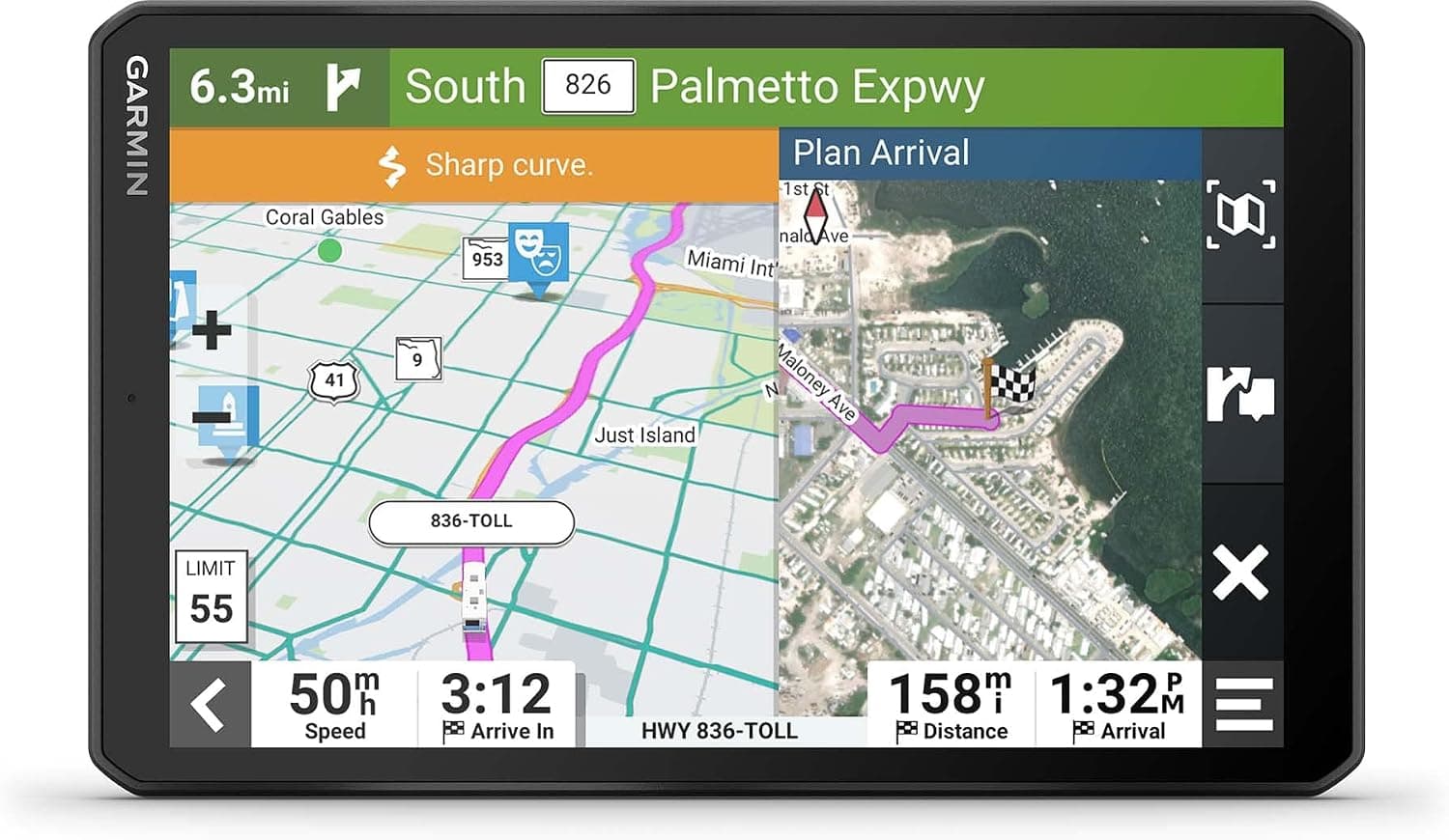
Garmin's RV 895, a large 8 inch GPS RV navigator with custom routing, Birdseye satellite imagery, park directory and flexible display view.
Price range: See on Amazon
What we liked
- + 8 inch screen balances readability and dash space
- + Birdseye satellite imagery previews campground layouts
- + Landscape or portrait view fits various mounting spots
Trade-offs
- - Costs more than Garmin's smaller RV navigator for a modest screen increase
- - Some live features require pairing with a phone app
Who This Navigator Is For
The Garmin RV 895 targets owners of larger motorhomes and travel trailers who want a dedicated, windshield mounted navigator rather than a phone map app pressed into service. Because it is built around RV specific routing, it can factor in a rig's height, weight, length and width before it plots a path, steering around low bridges, weight restricted roads and turns that a car GPS would send an RV into without warning. The 8 inch screen sits between Garmin's smaller 7 inch RV 795 and the larger 10 inch RV 1095, making it a middle ground for drivers who want more map on screen than a phone offers but still need something that fits a normal dash or windshield mount. Full timers and long haul travelers benefit most from the custom routing.
The 8 Inch Screen, Routing and Mapping Explained
The edge to edge 8 inch display runs in either landscape or portrait orientation, so it can be mounted to suit whatever clear sightline is available on a given dash. Garmin's Birdseye satellite imagery lets a driver preview a campground layout before arrival, which helps with judging site width, turn radius and where utility hookups sit relative to the pad. Preloaded street maps cover the United States, Mexico, Canada, Puerto Rico, the U.S. Virgin Islands, the Cayman Islands and the Bahamas, along with a directory of RV parks and services built into the unit. Built in road warning alerts flag railroad crossings, red light cameras, school zones, sharp curves, speed changes and traffic, which matters more in a vehicle that cannot stop or turn as quickly as a car. Bluetooth support also enables hands free calling through the unit.
Living With the RV 895 on the Road
Setup starts with entering the RV's dimensions and weight so the unit's routing engine can apply them to every trip from that point forward. Built in Wi-Fi handles map and software updates without needing a computer, which keeps the preloaded North American maps current over the life of the unit. Day to day, the touchscreen response and route recalculation are quick thanks to Garmin's upgraded hardware platform, and the park and service directory means a driver can search for a campground or fuel stop without switching to a phone. The main ongoing task is periodically connecting to Wi-Fi for updates and confirming the RV profile after any change in tow setup, like adding a trailer.
Trade-offs and How It Compares
The clearest trade-off is cost relative to Garmin's smaller RV 795, which shares most of the same routing and alert features on a 7 inch screen for less money, so the RV 895 mainly earns its price with the larger display and portrait mounting option. Buyers who want the largest possible screen should look at the 10 inch RV 1095 instead, which uses the same routing engine on more glass for a further step up in price. Some live features, such as pulling in current traffic or weather, depend on pairing the unit with the Garmin Drive app on a phone rather than working entirely standalone. None of this changes the core routing accuracy, but it does mean a phone is still useful as a companion.
Verdict and Who Should Look Elsewhere
The RV 895 is a strong pick for anyone who drives a motorhome or a trailer often enough that RV specific routing pays for itself in avoided low bridges and blocked roads, and who wants a screen larger than 7 inches without going all the way to 10. Owners on a tighter budget who mainly drive shorter, familiar routes may get by with the smaller RV 795 instead. Owners of the widest rigs who want the biggest possible map should consider the RV 1095, which offers the same routing logic on a larger display.
Frequently asked questions
Does the Garmin RV 895 route around low bridges and weight limits?
Yes. Once you enter your RV's height, weight, length and width, the unit calculates routes that avoid roads, bridges and turns unsuited to those dimensions.
Can the RV 895 be mounted in portrait orientation?
Yes, the 8 inch display supports both landscape and portrait viewing, so it can be positioned to fit different dash and windshield mounts.
Do I need a phone paired with the RV 895 to use it?
No, core navigation and the park directory work standalone, but some live features like traffic and weather need the unit paired with the Garmin Drive app on a phone.
How does the RV 895 compare with the smaller RV 795?
Both use the same RV specific routing and alert features. The RV 895 adds a larger 8 inch screen and portrait mode, at a higher price than the 7 inch RV 795.
Prices change often, so check the current price and availability on Amazon.
Check price on AmazonRV Upgrade Hub may earn a commission from the link above.