RVMATE 30 Amp 50 Feet RV Power Extension Cord with Easy Plug-in Handle, TT-30P to TT-30R, LED Indicator, 10 AWG, ETL Listed Review (2026)
Updated September 14, 2026 · Research-based review
Our verdict
A straightforward 30 amp, 50 foot extension cord for campers who occasionally need extra reach to a power pedestal. The 10 AWG copper wire and ETL listing cover the electrical basics well, but the standard non-locking female end means it is not the choice for sites where the cord gets tugged or left unattended.
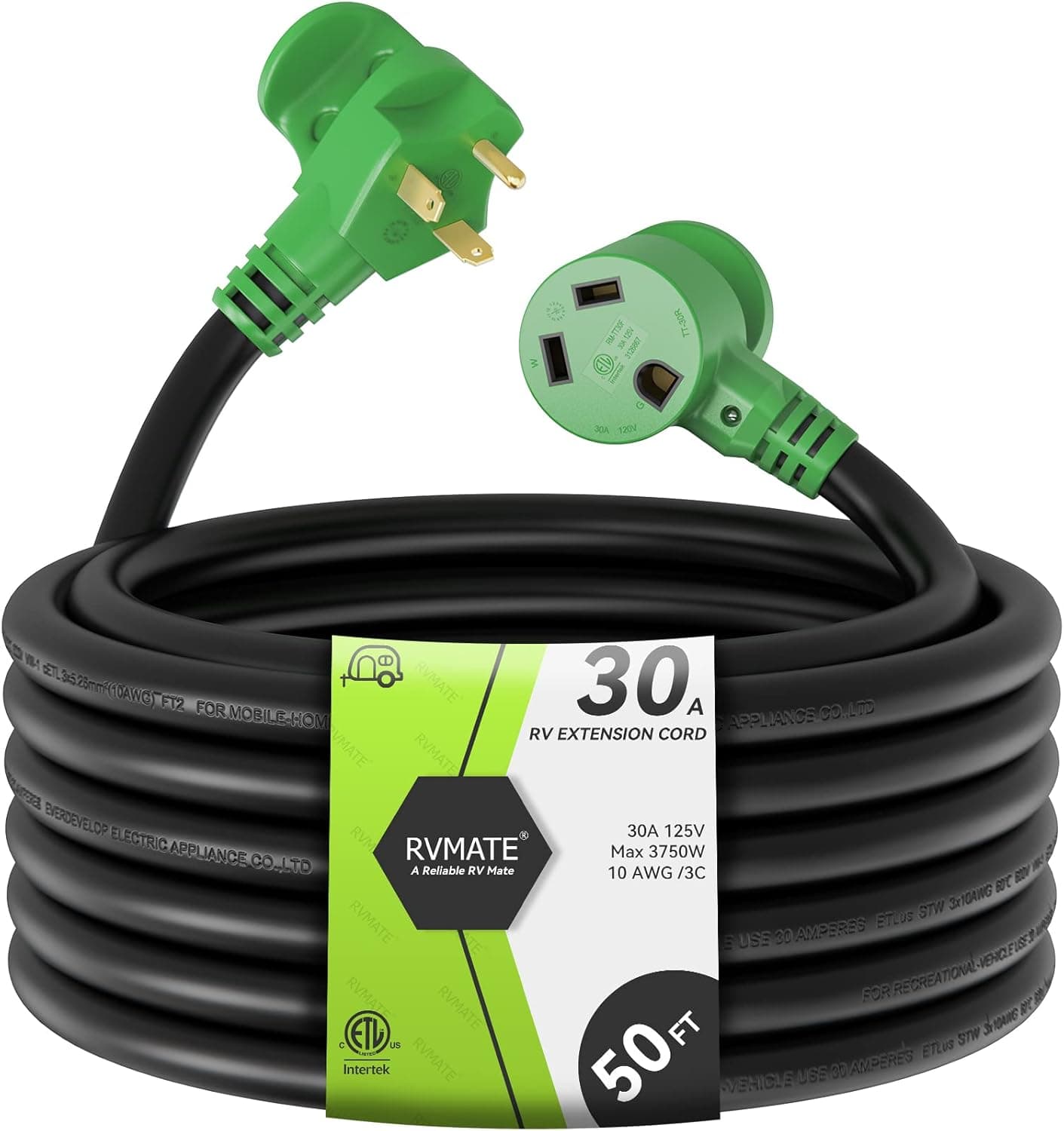
RVMATE's 30 Amp 50 Feet RV extension cord with plug-in handle, TT-30P to TT-30R ends, LED indicator and 10 AWG wire.
Price range: See on Amazon
What we liked
- + 10 AWG wire is the right size for 30 amp loads at 50 Feet
- + Easy plug-in handle gives a firm grip on stiff outlets
- + LED indicator helps confirm the pedestal breaker is on
Trade-offs
- - Standard non-locking female end can work loose if pulled
- - Bulky coil needs a dedicated bin or strap in the storage bay
Who this cord suits
This cord is aimed at RVers who need extra distance between a 30 amp pedestal and the rig's power inlet, whether that is a back-in site with an awkwardly placed post or a driveway setup at home. It uses the standard TT-30P male plug and TT-30R female connector rather than a locking design, so it suits campers who plug in, hook up and mostly leave the connection alone for the stay. Anyone who needs the cord to stay locked together in a high-traffic site, or who routinely coils and uncoils it at odd angles, may want RVMATE's lockable TT-30P to L5-30R version instead, since that swaps the standard female end for one that twists and locks in place.
Specs explained in plain English
The cord uses 10 AWG copper conductors, which is the wire gauge generally specified for continuous 30 amp loads, and it carries an ETL listing rated at 125V and 3750W. The outer jacket is a flame retardant, heat resistant PVC sheath rated for a maximum working temperature of about 60 degrees Celsius, which is meant to keep the cord flexible rather than stiffening up in cold weather at a campsite. The plug end has a 90 degree angled design with a strain relief boot to reduce stress where the cord meets the plug, and a built-in LED indicator lights up to confirm the pedestal is supplying power before you rely on it.
Living with it day to day
The molded plug-in handle is meant to give a firmer grip when pushing the male end into a stiff or worn campground outlet, which is a common complaint with older pedestals. The LED indicator is a quick way to confirm power is live at the post without having to check a breaker panel across the site. In the box, the cord ships with a plastic strap for coiling, a storage bag to keep it separate from other gear in a basement bay, and a cleaning towel. Because the coil is bulky at 50 feet of 10 AWG cable, most owners end up keeping it in a dedicated bin or hanging it rather than tossing it loose into storage.
Where it falls short and how it compares
The standard non-locking female connector is the main trade-off here. Rivals like the RVGUARD 30 Amp 50 Foot cord and Kohree's version add a locking or 90 degree locking adapter design specifically to stop the connection from working loose if the cord gets pulled or shifts in wind, which this cord does not include. PlugSaf's similarly specced 50 foot, 10 gauge cord scores about the same in this guide and shares the same grip-handle approach without locking either. If a secure, tug-resistant connection matters more than cost, a locking cord is the safer pick; if you mainly need reliable extra length at a quiet site, this one covers the basics.
Verdict and who should look elsewhere
For campers who need a dependable 50 foot bridge to the pedestal and do not need a locking connector, this cord's 10 AWG copper wire, ETL rating and LED indicator cover what matters. Owners who camp in busy or windy sites where the cord gets bumped, or who want extra insurance against an accidental disconnect, should look at a locking version instead, since the connector type is the one real gap between this cord and its higher-scoring rivals. Either way, checking that the LED indicator lights up as soon as you plug in remains the simplest way to confirm the pedestal is actually delivering power before you rely on it overnight.
Frequently asked questions
What gauge wire and amp rating does this cord use?
It uses 10 AWG copper wire rated for 30 amp, 125V, 3750W service and carries an ETL listing.
Does the female end lock onto the RV inlet?
No, it uses the standard non-locking TT-30R connector. RVMATE sells a separate lockable TT-30P to L5-30R version.
What comes in the box besides the cord?
A plastic coiling strap, a storage bag, and a cleaning towel ship with the cord.
How can I tell the pedestal is supplying power?
The cord has a built-in LED indicator that lights when it is connected to live power.
Prices change often, so check the current price and availability on Amazon.
Check price on AmazonRV Upgrade Hub may earn a commission from the link above.