LiTime 12V 100Ah RV Lithium Battery Group 31 Rechargeable LiFePO4 with Up to 15000 Deep Cycles (1 Pack) Review (2026)
Updated September 21, 2026 · Research-based review
Our verdict
A strong upgrade for RV owners swapping lead-acid for lithium in an existing Group 31 battery tray, offering far more usable capacity and a long cycle life. This listing does not mention a low-temperature charge cutoff, so protecting the battery from charging in freezing conditions is left to the owner rather than built into the battery.
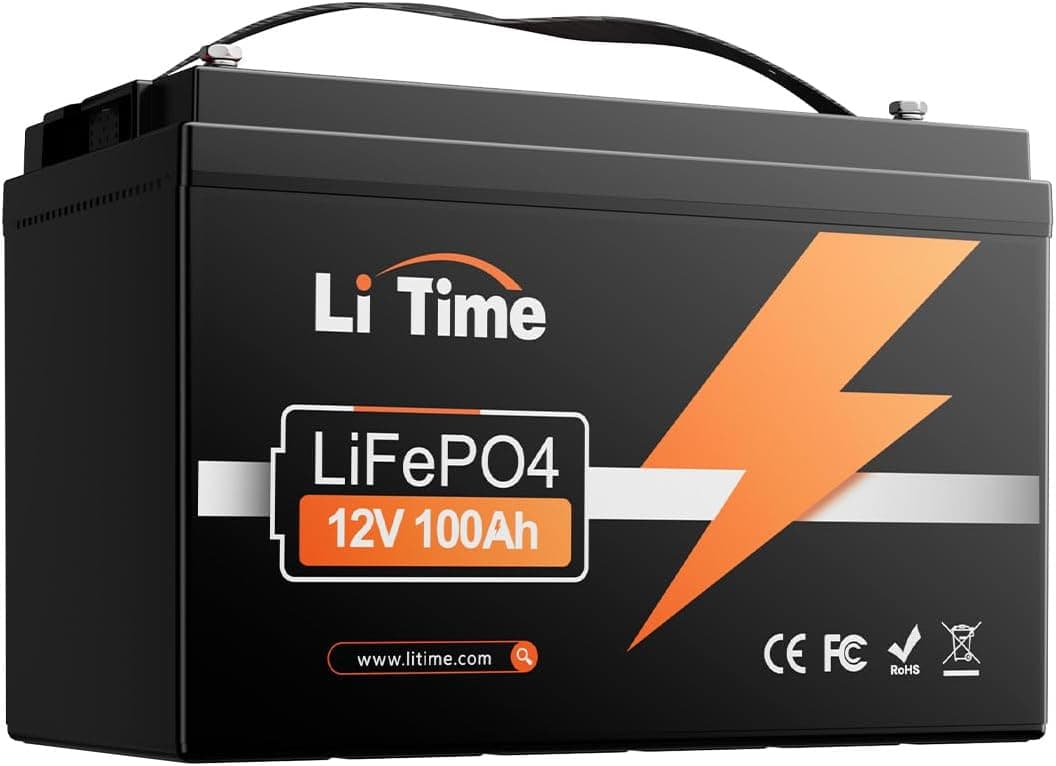
LiTime's 12V 100Ah Group 31 LiFePO4 RV lithium battery, a 1 Pack deep cycle battery rated for up to 15000 cycles.
Price range: See on Amazon
What we liked
- + Group 31 size fits many existing RV battery boxes and trays
- + LiFePO4 chemistry gives far more usable capacity than lead-acid
- + Rated up to 15000 deep cycles for years of off-grid use
Trade-offs
- - No low-temp cut-off mentioned, so protect it from freezing charges
- - Upgrading from lead-acid may require new charger settings
Group 31 sizing for easy swaps
LiTime builds this battery in the Group 31 form factor, one of the most common battery tray sizes used in RVs, trucks, and marine applications, which means it is likely to drop into an existing battery box or tray designed for a Group 31 lead-acid or AGM battery without modification. This is a meaningful convenience for owners upgrading rather than building a system from scratch, since it avoids the need to fabricate a new battery box or reroute cabling to fit a different footprint. Confirming your specific tray dimensions before ordering is still worthwhile, since terminal placement can vary slightly between battery brands.
LiFePO4 capacity and usable energy
The battery is rated at 12.8 volts and 100Ah, working out to about 1280Wh of stored energy. The key advantage over a lead-acid battery of the same rated capacity is that LiFePO4 chemistry can be discharged much more deeply without damage, so a much larger share of that 100Ah is actually usable day to day. Lead-acid batteries are typically limited to discharging around half their rated capacity to preserve lifespan, while LiFePO4 batteries like this one are designed for regular deep discharge, which is why upgrading often feels like gaining far more capacity than the amp-hour number alone suggests.
Built-in BMS protection
A built-in battery management system rated at 100A handles protection against overcharging, overdischarging, overcurrent, overheating, and short circuits, which are the main failure modes that shorten lithium battery life if left unmanaged. This kind of integrated BMS is standard across most quality 12V LiFePO4 batteries in this category, and it removes the need for a separate external protection circuit that older DIY lithium conversions often required. The battery housing is also rated IP65 for dust and water resistance, which is relevant for battery compartments exposed to road spray or occasional moisture, and it adds a layer of protection lead-acid battery cases typically do not offer.
Cold weather charging caution
This listing does not mention a low-temperature charge cutoff feature, unlike some competing LiFePO4 batteries that automatically stop charging below freezing to protect the cells from damage. Charging lithium iron phosphate cells below freezing can cause permanent capacity loss even though the battery may still discharge normally in cold weather, so owners in cold climates should avoid charging this battery when its internal temperature is near or below freezing, either by keeping it in a heated compartment or by pairing it with a charge controller or solar setup that includes its own temperature-based cutoff. This is worth planning for ahead of any winter trip rather than discovering it mid-season.
Who should buy this battery
This battery suits RV owners upgrading from a lead-acid Group 31 battery who want a straightforward physical swap along with a large jump in usable capacity and cycle life, rated for up to 15,000 cycles. It is a good fit for boondockers and full-timers looking to reduce weight and increase available power without redesigning their battery compartment. Owners who camp in consistently cold climates and charge frequently in freezing temperatures should pay close attention to charging conditions or consider a model with a built-in low-temperature disconnect instead, since this battery leaves that particular safeguard up to the owner rather than the BMS.
Frequently asked questions
Will this battery fit a standard RV battery tray?
It is built in the Group 31 size, one of the most common RV and marine battery form factors, so it typically fits existing Group 31 trays.
How much usable capacity does this battery have?
It is rated at 100Ah and about 1280Wh, and LiFePO4 chemistry allows much deeper regular discharge than a lead-acid battery of the same rating.
Does this battery protect itself from cold-weather charging damage?
This listing does not mention a low-temperature charge cutoff, so avoid charging it when its internal temperature is near or below freezing.
How many charge cycles is this battery rated for?
LiTime rates it for up to 15,000 deep cycles under the manufacturer's stated conditions.
Prices change often, so check the current price and availability on Amazon.
Check price on AmazonRV Upgrade Hub may earn a commission from the link above.