RVGUARD RV Water Pressure Regulator Valve, CSA Approved, Lead-Free Brass, Adjustable with Gauge and Inlet Screen Filter Review (2026)
Updated September 20, 2026 · Research-based review
Our verdict
RVGUARD's regulator uses lead-free brass and adjusts from 45 up to 160 PSI with a screwdriver, and it shows the live reading on its built-in gauge while an inlet screen catches debris before it reaches the RV. It is CSA certified and bulkier than a simple inline regulator, and adjustment needs a small tool rather than a knob.
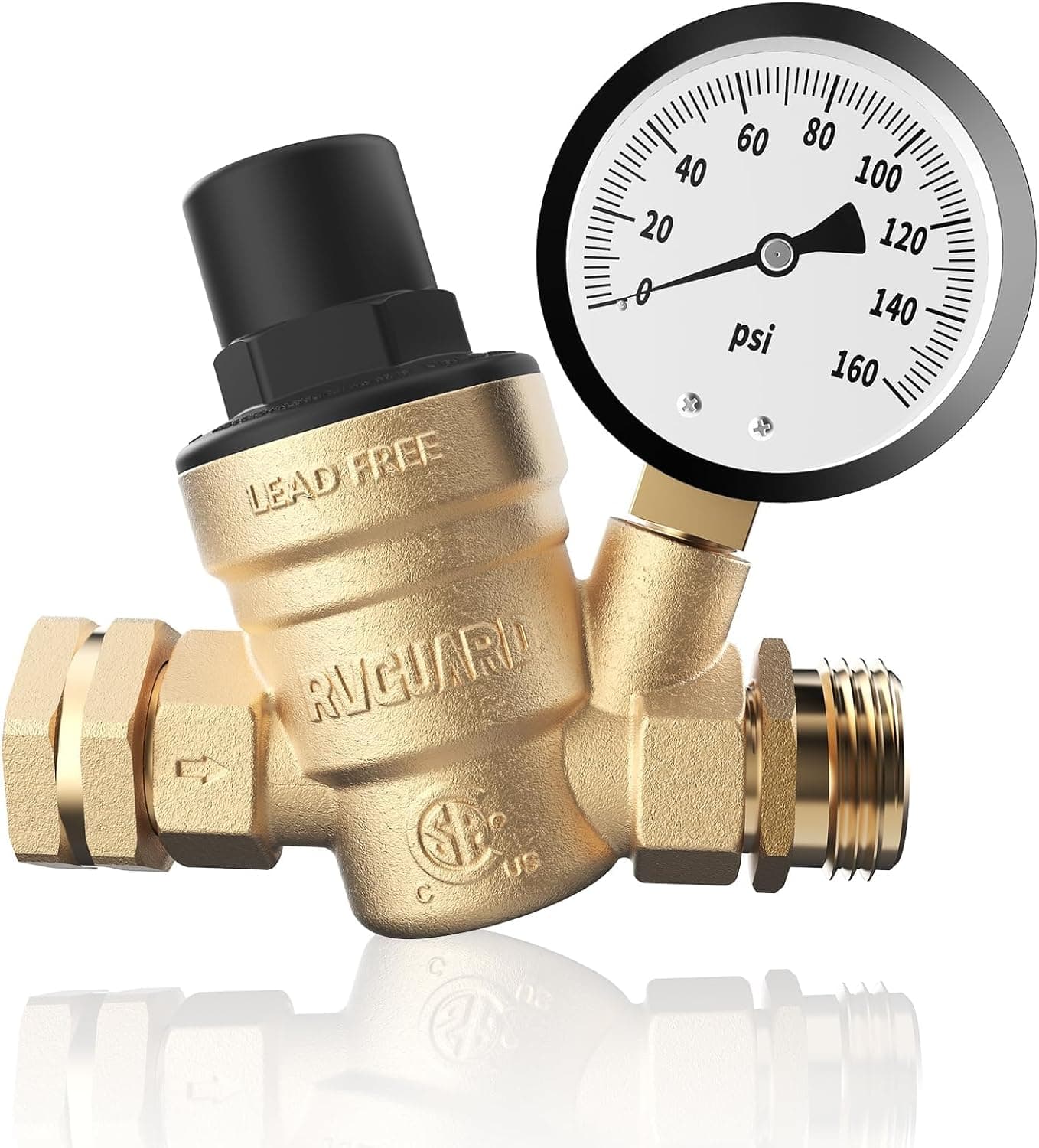
RVGUARD's adjustable RV water pressure regulator valve in lead-free brass with gauge and inlet screen filter, CSA approved.
Price range: See on Amazon
What we liked
- + Built-in gauge shows exact pressure while you adjust it
- + Inlet screen filter catches debris before it reaches the RV
- + CSA approved lead-free brass is safe for drinking water
Trade-offs
- - Adjustment needs a screwdriver, unlike knob-style regulators
- - Bulkier than simple inline regulators at the spigot
Why RV plumbing needs a regulator
Campground water pressure varies a lot from park to park, and pressure that is too high for an RV's plumbing can split fittings, blow out a water heater connection or cause a slow leak inside a wall where it is hard to spot. RVGUARD's regulator threads onto a standard 3/4 inch garden hose connection between the spigot and the RV's fresh water hose, and it is set from the factory to reduce incoming pressure to a safer level before the water ever reaches the rig's internal lines, which protects fittings that are generally rated for lower pressure than a typical municipal supply.
Adjustable range and the built-in gauge
Unlike a fixed-pressure inline regulator, this model can be adjusted with a screwdriver from roughly 45 PSI up to 160 PSI, turning clockwise to raise pressure and counterclockwise to lower it, which lets an owner dial in a setting that suits their specific RV's plumbing rather than accepting one fixed output. The built-in gauge shows the live pressure reading while adjusting, so there is no guessing whether the setting has actually changed, and it stays visible afterward as a quick check before connecting the water hose at a new site with unknown pressure.
Materials and certification
The regulator body is made from Class C46500 lead-free brass, and RVGUARD states each unit is tested to contain less than 0.13 percent lead, which is below the 0.25 percent limit set by the NSF/ANSI 372 lead-free standard for products in contact with drinking water. The regulator is also CSA certified, a recognized safety and performance certification in North America for plumbing and water-contact hardware, which is a meaningful marker for a fitting that sits directly in an RV's drinking water line rather than just an outdoor hose accessory.
The inlet screen filter
A screen filter sits at the water inlet side of the regulator and is designed to catch sediment, sand and other debris coming from the spigot or hose before it can reach the regulator's internal mechanism or continue on into the RV's plumbing and appliances. That matters most at older campgrounds or rural parks where hose bibs are not always well maintained and can push grit through the line. Keeping debris out at this stage helps protect downstream fittings, the water pump strainer and appliance inlet screens from buildup over a season of hookups, and it is a small addition that costs nothing extra to use since it sits inline automatically.
Tradeoffs versus simpler regulators
The adjustability and gauge that make this regulator useful also make it larger and a bit more involved to set than a basic fixed-output inline regulator that just threads on and works with zero adjustment. Changing the pressure setting requires a small screwdriver rather than a hand-turned knob, so it is not quite as quick to tweak on the fly as knob-style regulators in the same lineup, including RVGUARD's own tool-free version. For an owner who wants one setting dialed in and left alone, or who wants to verify pressure with a visible gauge every time they hook up at a new campground, that tradeoff is reasonable; for someone who wants no-fuss simplicity and never touches the setting, a basic fixed regulator without a gauge may suit better and take up less room at the spigot.
Frequently asked questions
What pressure range can this RVGUARD regulator be adjusted to?
It adjusts from about 45 PSI up to 160 PSI using a screwdriver, with the current setting visible on the built-in gauge.
Is this regulator safe for drinking water lines?
Yes. It is made from Class C46500 lead-free brass tested below the NSF/ANSI 372 lead limit and is CSA certified.
Does it need tools to adjust the pressure?
Yes, this model is adjusted with a screwdriver rather than a hand knob; RVGUARD also sells a tool-free knob version if that is preferred.
What does the inlet screen filter do?
It catches sediment and debris from the campground spigot or hose before it reaches the regulator's internals and the RV's plumbing downstream.
Prices change often, so check the current price and availability on Amazon.
Check price on AmazonRV Upgrade Hub may earn a commission from the link above.