Dicor 501LSW-1 Self-Leveling Lap Sealant, 4 Pack Review (2026)
Updated September 20, 2026 · Research-based review
Our verdict
Dicor's 501LSW-1 is the self-leveling white lap sealant many RV manufacturers use on rubber roofs, sold here as a 4 pack for a full reseal around vents, edges and screw heads. It only works on horizontal surfaces and needs a caulk gun and a clean, dry roof, but the flexible, UV-stable formula is a proven standard.
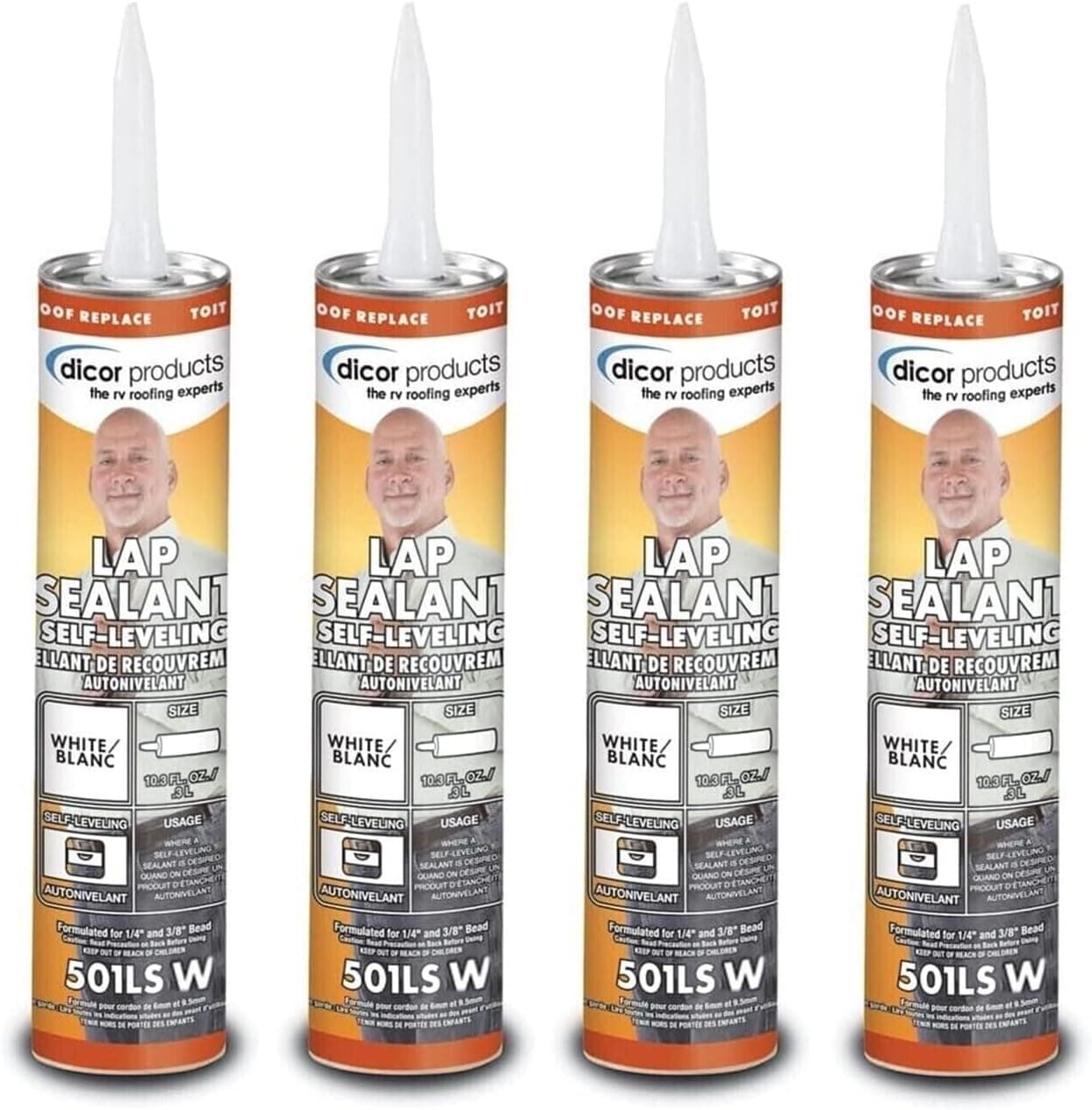
Dicor's 501LSW-1 self-leveling lap sealant 4 Pack, the go-to caulk for RV roof edges, vents and seams.
Price range: See on Amazon
What we liked
- + Dicor is the standard sealant many RV makers use on rubber roofs
- + Self-leveling formula flows into gaps for a smooth seal
- + 4 Pack covers a full roof reseal around vents and edges
Trade-offs
- - Only for horizontal surfaces, since it runs on vertical seams
- - Needs a caulk gun and dry, clean surfaces to bond properly
What self-leveling lap sealant is for
Dicor's 501LSW-1 is designed to flow out and settle flat on horizontal RV roof surfaces, which is why it is called self-leveling rather than a standard tube caulk that holds its bead shape. That flow property lets it fill the low spots around roof vents, skylights, antenna bases and lap seams so water cannot pool and find a way through screw holes or seam edges. Dicor states the sealant adheres to aluminum, mortar, wood, vinyl, galvanized metal, fiberglass and concrete, and it is also compatible with EPDM, TPO and PVC roofing membranes, which covers the roofing materials found on most travel trailers, fifth wheels and motorhomes built in the last few decades.
Formula, cure time and UV stability
The sealant is UV stabilized so it resists breaking down and discoloring after months of direct sun exposure on a roof, and Dicor states it will not stain or discolor the roofing material underneath it. According to Dicor's own cure schedule at 50 to 70 degrees Fahrenheit, the sealant skins over in about 5 minutes, becomes waterproof at roughly 4 hours, reaches about 80 percent cure at 48 hours and fully cures in 30 days. The formula is also HAPS-free, meaning it avoids certain hazardous air pollutants during application, which Dicor markets as a cleaner and safer option to apply than older sealant chemistries.
Application and surface prep
Each tube holds 10.3 ounces, and this listing bundles four tubes, enough for a full roof reseal pass around vents, edges and screw heads on a typical rig rather than a single spot repair. Dicor's instructions call for cleaning the surface of dirt, loose paint, rust, oil and grease and letting it dry fully before applying, since the sealant will not bond well to a dirty or damp roof. It goes on with a standard caulking gun, and in cold weather Dicor recommends warming the tube to room temperature first so it flows properly rather than sitting stiff in the applicator.
Where it does not work
This is strictly a horizontal-surface sealant, so it is not meant for vertical seams on the sides of the RV, around windows, or on other non-flat joints, since the self-leveling property that makes it useful on a roof means it will simply run on a vertical surface instead of staying put. For those spots, Dicor and other manufacturers sell a non-sag or vertical-surface sealant that holds its shape once applied rather than flowing out flat. Buyers doing a full exterior reseal typically need both types on hand, using the self-leveling formula only on the roof and its flat fixtures, and switching to the non-sag tube for door and window trim, corner seams and any vertical panel joint.
Why it is the standard choice
Dicor is one of the sealant brands used directly by RV manufacturers on the factory line, and that OEM presence is a large part of why it shows up as the top recommendation in most RV roof sealant comparisons, including against newer competing lap sealants sold in similar 4 packs. The 4 pack format keeps the per-tube cost down for anyone doing a full annual reseal rather than a single touch-up, and buying a known, widely stocked brand also means replacement tubes are easy to find later at camping and RV parts retailers rather than a one-off import brand that may not be restocked.
Frequently asked questions
Can Dicor 501LSW-1 be used on vertical RV seams?
No. It is a self-leveling formula meant for flat, horizontal roof surfaces; on vertical seams it will run rather than hold its shape, so a non-sag lap sealant is the correct product there.
How long does Dicor self-leveling lap sealant take to cure?
At 50 to 70 degrees Fahrenheit, it skins over in about 5 minutes, becomes waterproof at around 4 hours, reaches roughly 80 percent cure at 48 hours, and fully cures within 30 days.
What roofing materials does it work on?
Dicor lists adhesion to aluminum, mortar, wood, vinyl, galvanized metal, fiberglass and concrete, and it is compatible with EPDM, TPO and PVC roof membranes.
Do I need a caulk gun to apply it?
Yes, it comes in a standard tube meant for a caulking gun, and the surface should be clean, dry and free of loose paint, oil or grease before application.
Prices change often, so check the current price and availability on Amazon.
Check price on AmazonRV Upgrade Hub may earn a commission from the link above.