Leveling and Stabilizing Your Rig
As an Amazon Associate I earn from qualifying purchases.
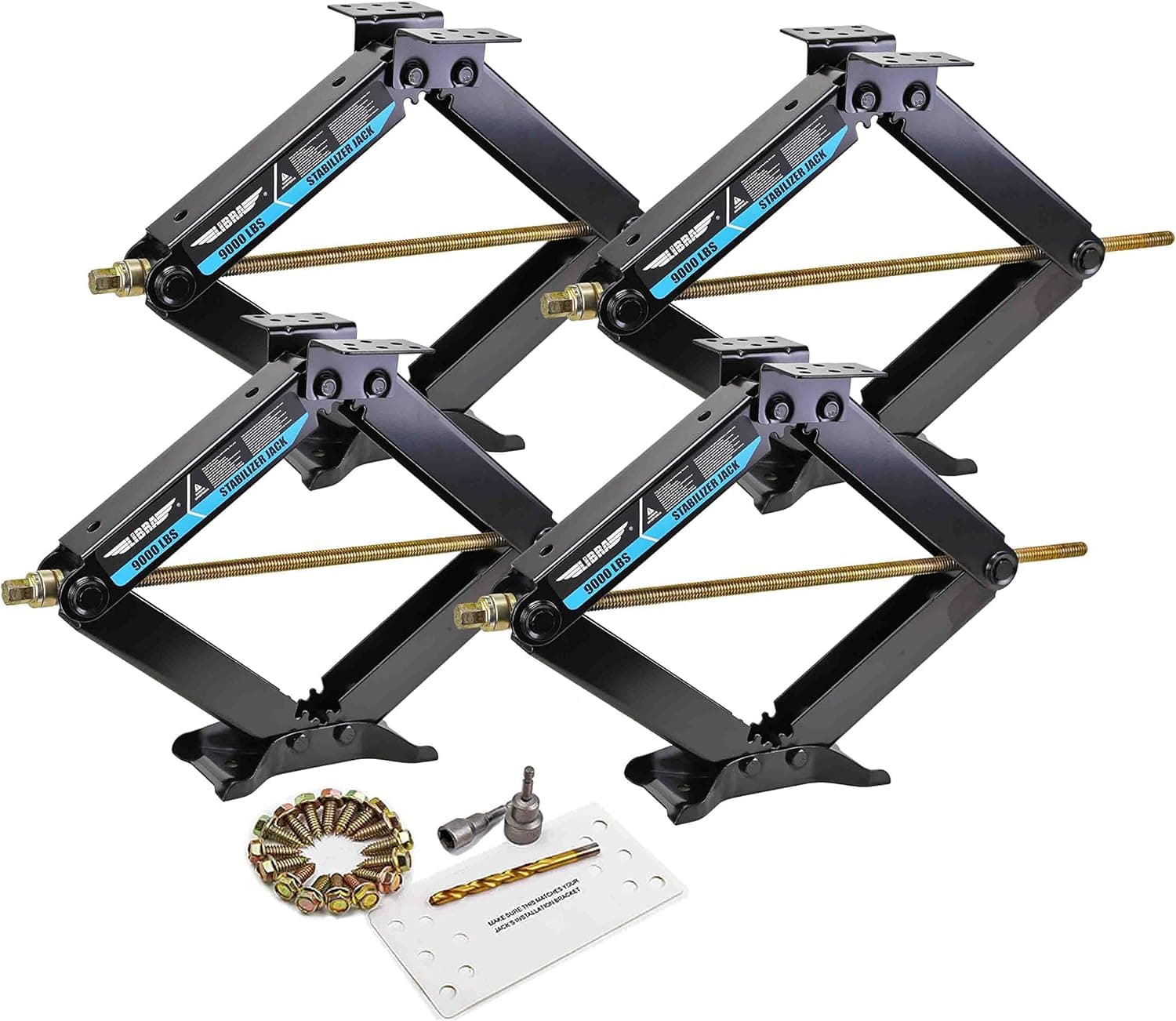
Getting your rig level and steady is one of the first things you do at every campsite, and doing it properly affects far more than comfort. An unlevel RV can damage an absorption refrigerator, make sleep miserable as you roll toward the low side, and put uneven stress on the frame. Understanding the difference between leveling and stabilizing, and doing each in the right order, turns a fussy chore into a two-minute routine.
Leveling and stabilizing are two separate jobs, and people often confuse them. Leveling means getting the coach flat side to side and front to back so appliances work and you are comfortable. Stabilizing means stopping the bounce and wobble once you are level, so the rig does not rock every time someone walks across it. Leveling jacks lift and support weight, while stabilizer jacks only steady a rig that is already sitting level on its wheels. Using stabilizer jacks to lift the rig can bend them and damage the frame, so keep the two roles clear.
Start with side-to-side leveling, because you must do it before you unhitch or drop the jacks. Pull into the site and check a level placed on the floor or use your RV's built-in sensor. If one side is low, drive up onto leveling blocks or ramps placed in front of or behind the tires on that side, then pull forward or back onto them until the bubble centers. Chock the wheels firmly once you are satisfied, since you are about to remove other things holding the rig in place.
Front-to-back leveling comes next and depends on your rig type. A travel trailer uses its tongue jack to raise or lower the front until level, while a fifth wheel uses its landing gear. A motorhome with hydraulic or electric leveling jacks can do both directions automatically, but even then it helps to get roughly level on blocks first so the jacks do not have to extend to their limits. Do not use the tongue jack or leveling jacks to compensate for a wheel that should have gone on a block, because that lifts a tire off the ground and removes support.
Once level, unhitch if you are towing, then deploy stabilizer jacks at the corners. Lower each until it makes firm contact and takes a little weight, but do not crank hard enough to lift the rig, which defeats the purpose and stresses the frame. Place a pad or block under each jack foot on soft ground so it does not sink overnight. For extra steadiness, X-braces or wheel chocks wedged tightly between the tires of a tandem axle dramatically reduce the front-to-back rocking that stabilizer jacks alone cannot stop.
A few tools make the whole process faster and safer. Interlocking plastic leveling blocks are lighter and grippier than scrap wood, curved drive-on levelers speed up single-axle trailers, and a cheap smartphone level app or a permanent bubble level takes the guessing out of it. Always chock before unhitching, always level before stabilizing, and never rely on stabilizer jacks to hold real weight. Follow that order every time and your fridge will run correctly, your nights will be still, and setup will become second nature.